
Wild at My Back Door
Wildlife from an Unexpected Corner of Rockton
When people see my wildlife photography, they often assume I've traveled somewhere specifically to find the animals in the photographs.
Sometimes I have.
But a surprising number of my wildlife photographs were taken without leaving home.
Behind my condo in Rockton, Illinois, is a small pond surrounded by trees, grasses and a narrow strip of undeveloped habitat. It isn't a wildlife refuge or a state park. It sits in the middle of a village, surrounded by homes, streets and the everyday activity of a residential neighborhood.
And yet, since moving here in the spring of 2024, it has provided me with a remarkable front-row seat to the natural world.
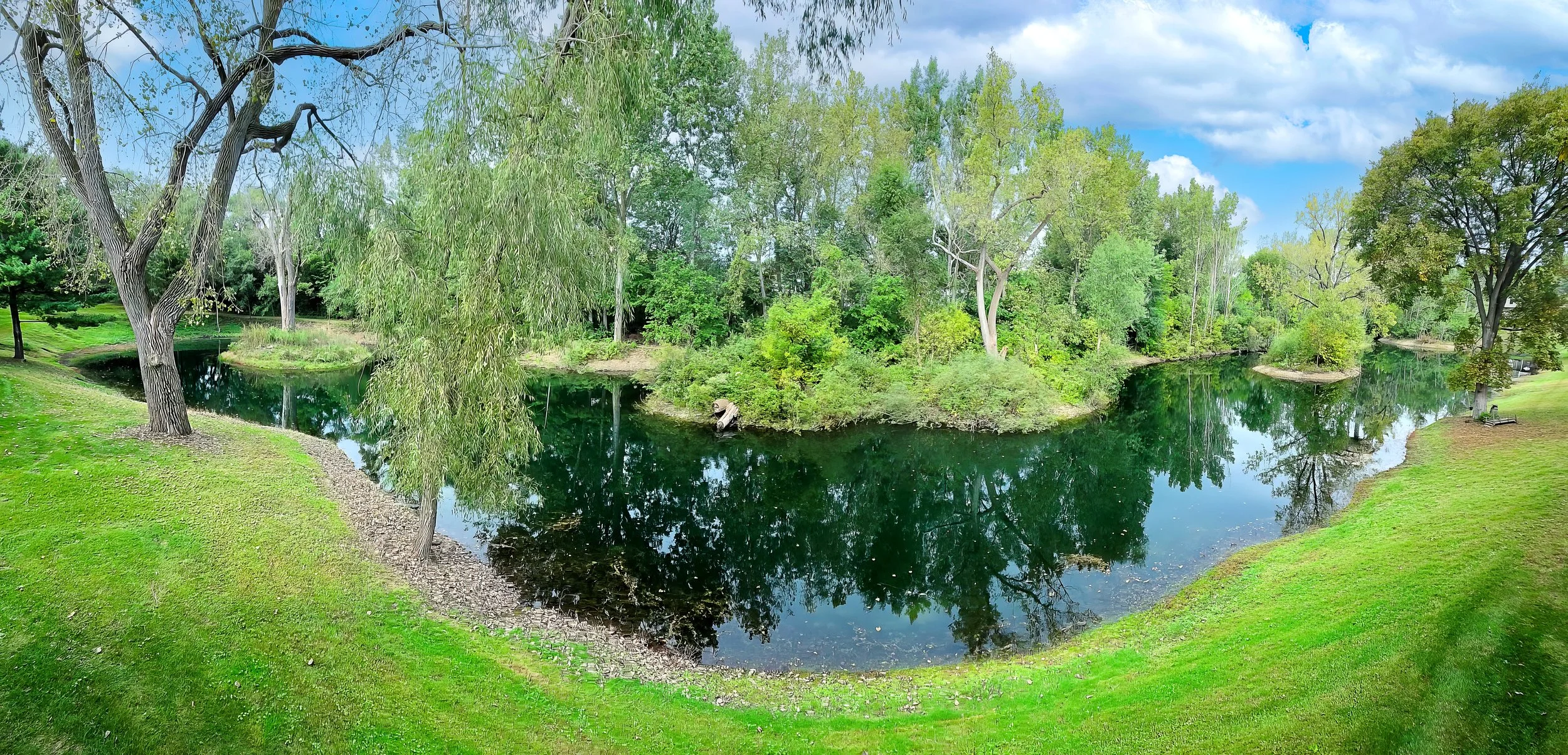
From my deck, I've watched birds hunt, feed, raise their young, compete for territory, dry their wings and occasionally do something completely unexpected. I've photographed tiny hummingbirds and large wild turkeys, colorful wood ducks and prehistoric-looking cormorants, kingfishers, hawks, herons and plenty of familiar backyard birds.
Even the water itself hides another part of the story.
The more time I've spent watching this little pond, the more I've realized that interesting wildlife photography doesn't always require traveling somewhere exotic.
Sometimes it is simply a matter of paying attention to what is already outside your back door.
A Pond Full of Surprises
Some of the most enjoyable visitors are the waterfowl that stop by throughout the year.
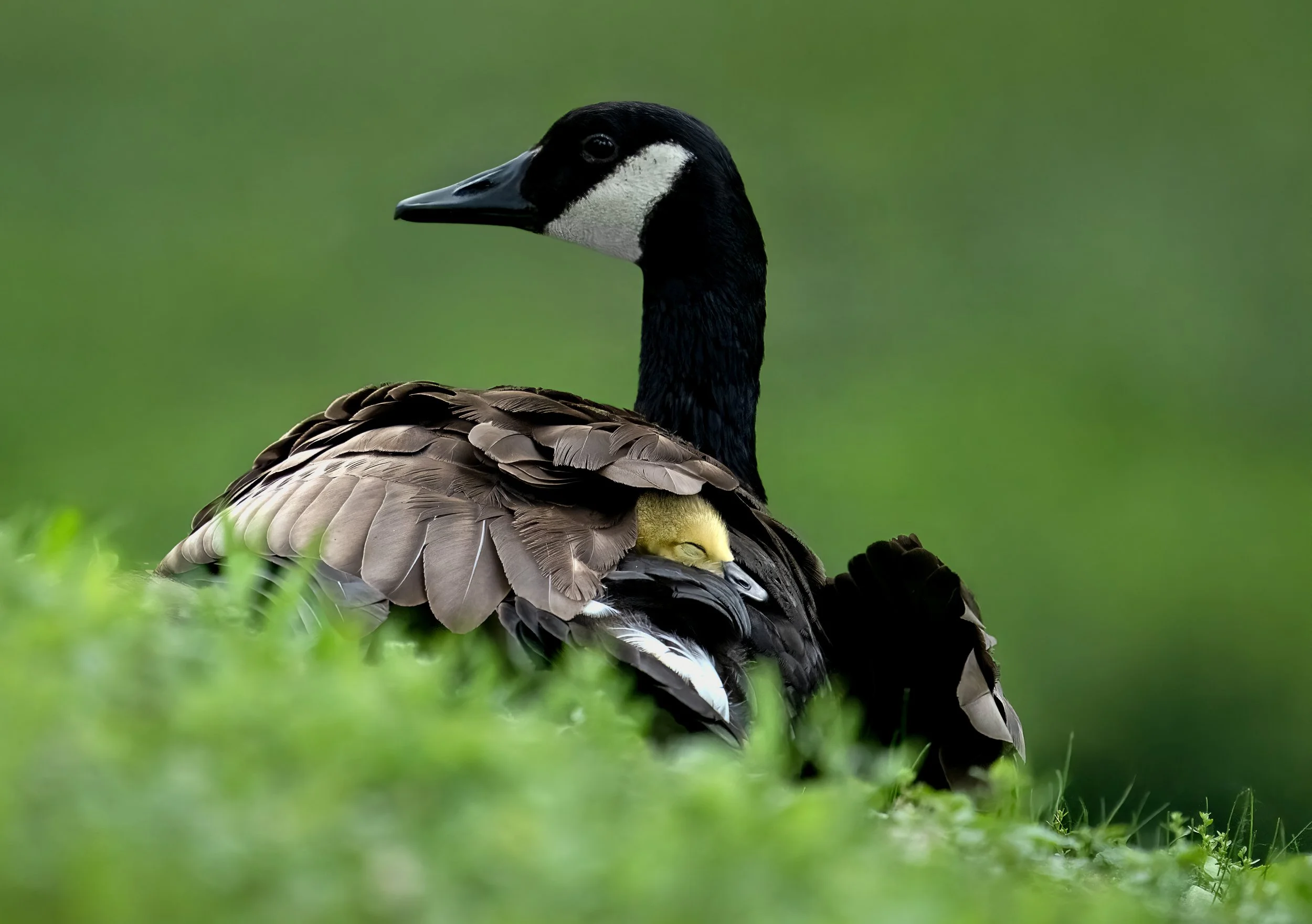
Canada geese are certainly not unusual in northern Illinois, but watching them closely reveals moments that are easy to overlook.
A protective parent sheltering a gosling beneath its body is an entirely different photograph from another Canada goose swimming across another suburban pond.
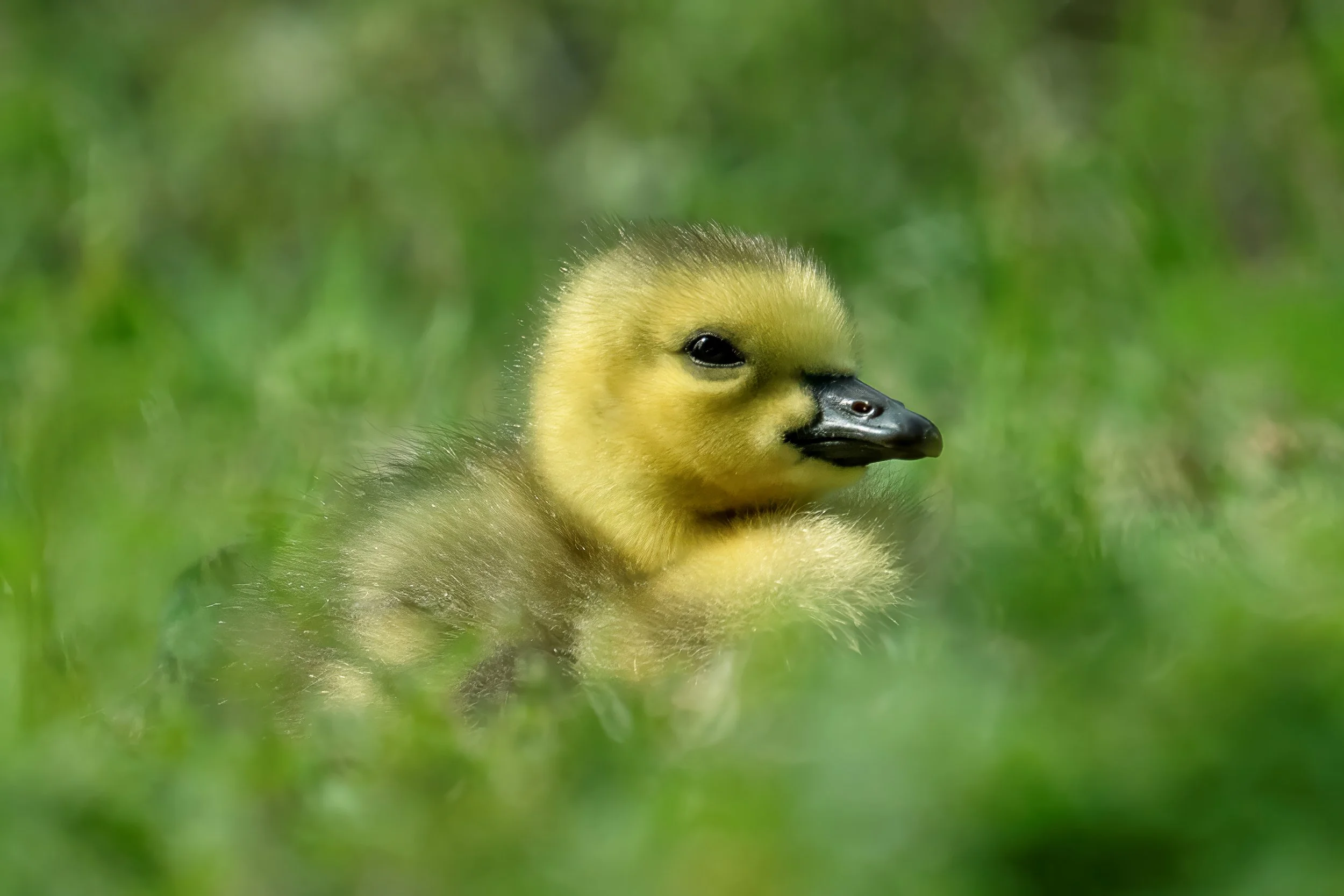
And when the youngsters emerge, even one of our most familiar species becomes surprisingly photogenic.
Occasionally the pond produces a visitor that looks almost too elaborate to be real.
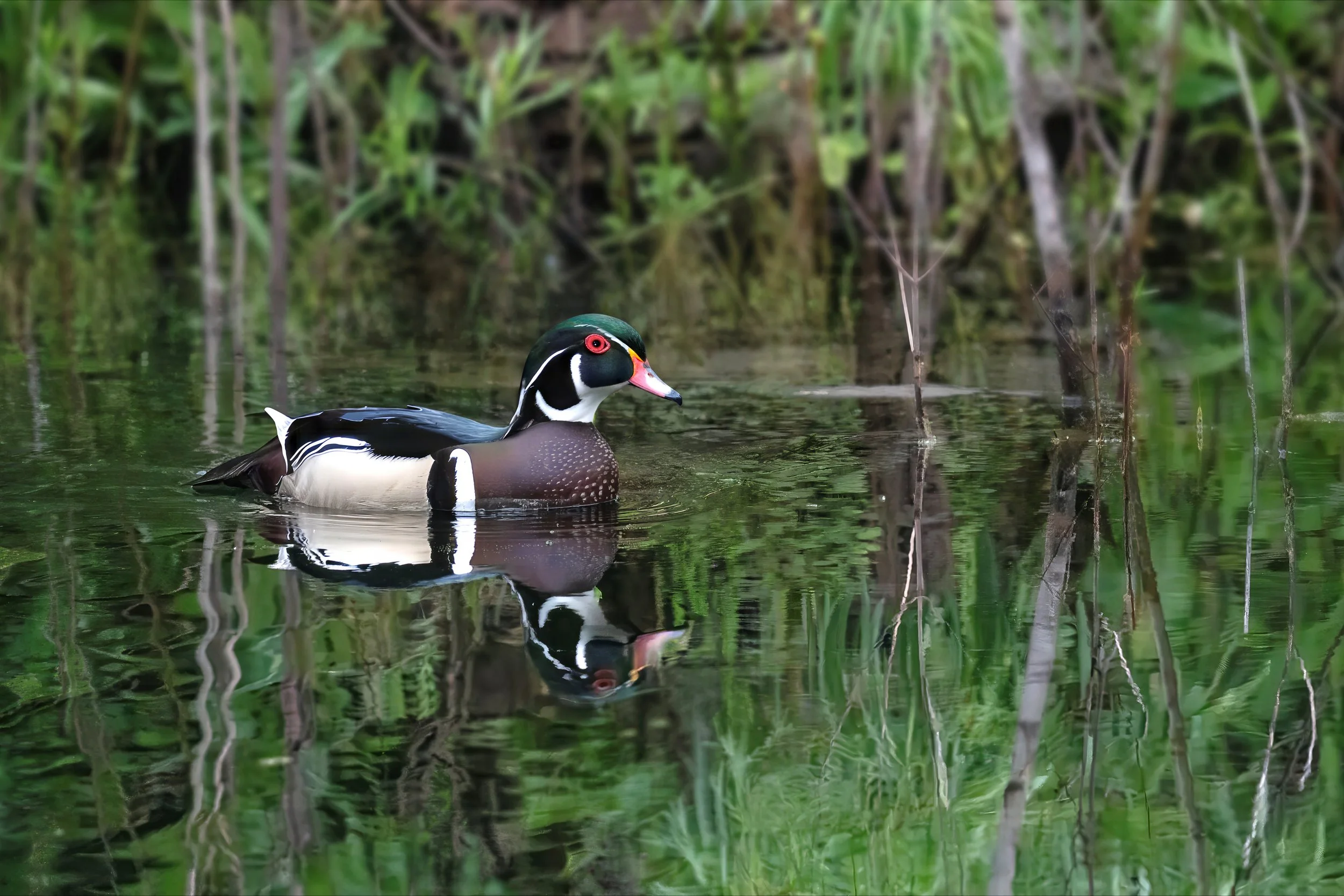
The male Wood Duck may be one of North America's most spectacularly patterned birds. Against the dark vegetation surrounding the pond, the brilliant facial markings, red eye and intricate plumage almost seem designed to be photographed.
What I particularly like about this photograph is that it isn't simply a portrait of the duck. The vegetation and distorted reflection beneath him retain a sense of place. This is the pond as the wildlife experiences it.
That is an important part of this collection.
Visitors come and go with the seasons, and I never know exactly what will appear next.
The Fishermen
Of all the birds that visit the pond, some of my favorites are the ones that arrive looking for a meal.
Belted Kingfishers are particularly challenging subjects. They're small, fast and rarely interested in cooperating with a photographer. Most encounters are over almost as quickly as they begin.
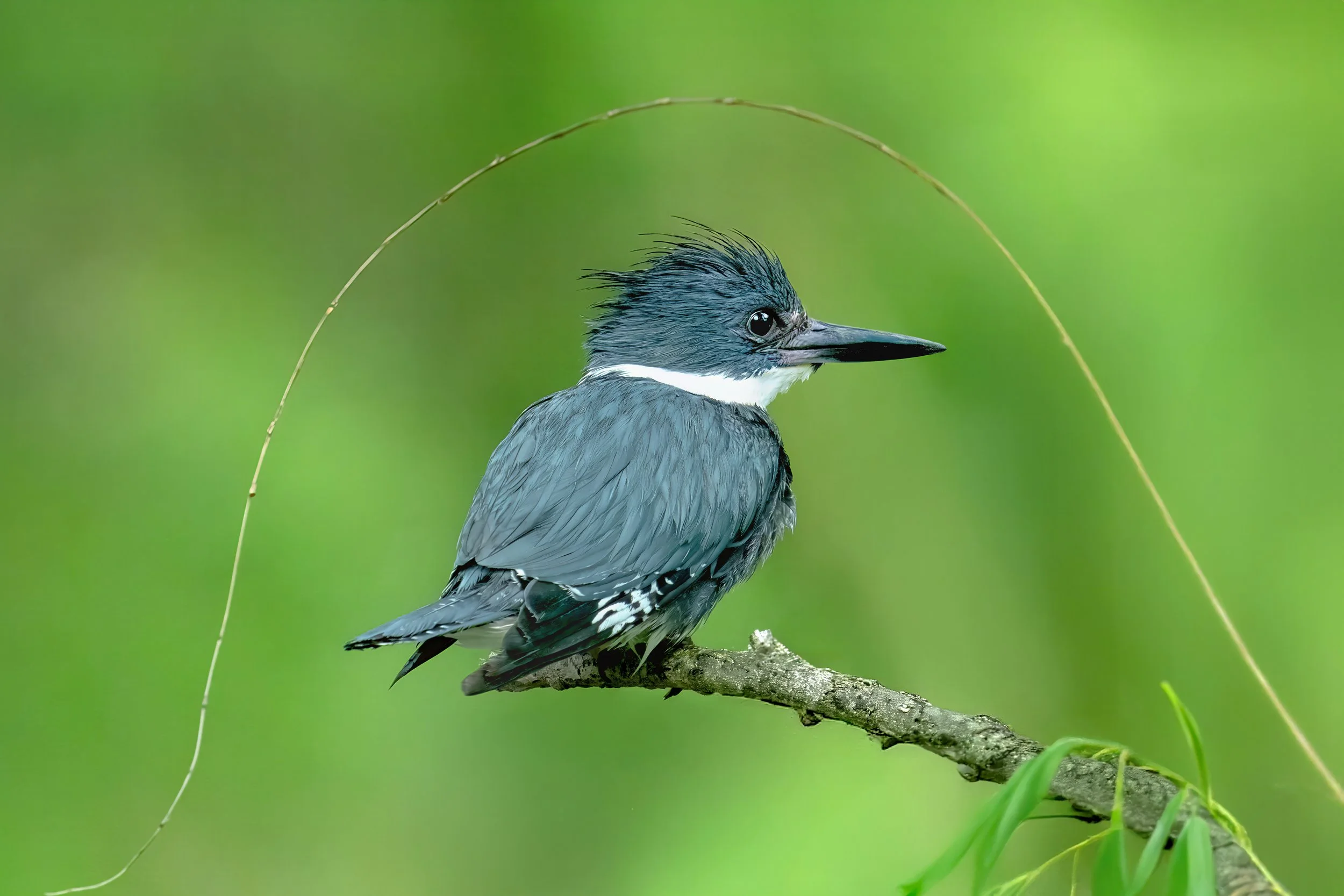
Occasionally, though, one returns from the pond with its catch and chooses exactly the right perch.
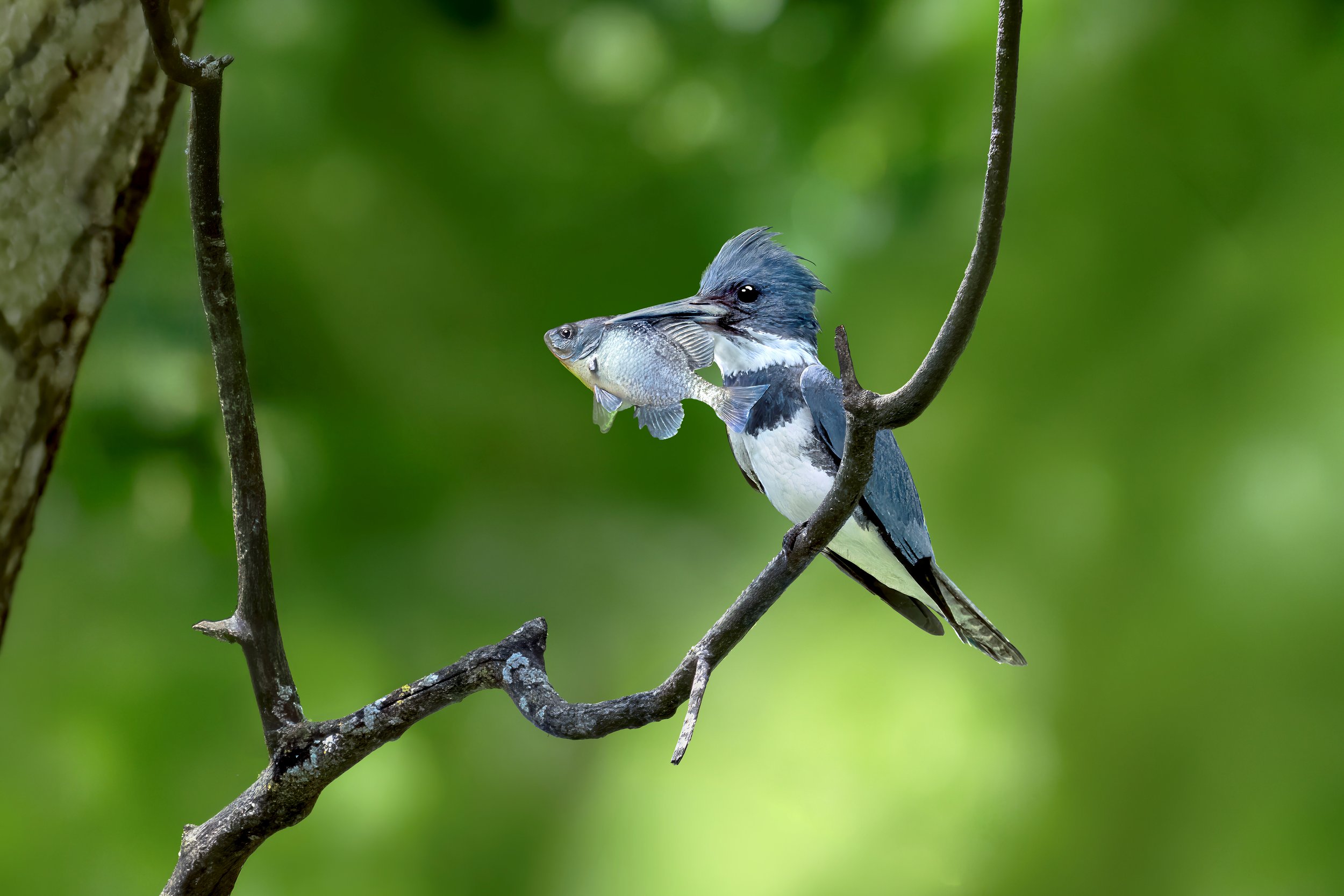
This is one of those photographs where the surroundings are as important to me as the detail in the bird. Framed naturally by the branches and surrounded by the summer greens along the pond, the kingfisher pauses with a freshly caught fish before moving on.
It's a scene I could easily have missed had I not been watching from the deck.
Photographs like this are why I often keep the camera nearby even when nothing appears to be happening. Wildlife photography frequently consists of long periods of inactivity interrupted by a few seconds when everything happens at once.
Great Blue Herons operate very differently.
They can remain almost motionless at the water's edge, watching beneath the surface before striking with astonishing speed.
One encounter produced one of my favorite photographs from this entire collection.
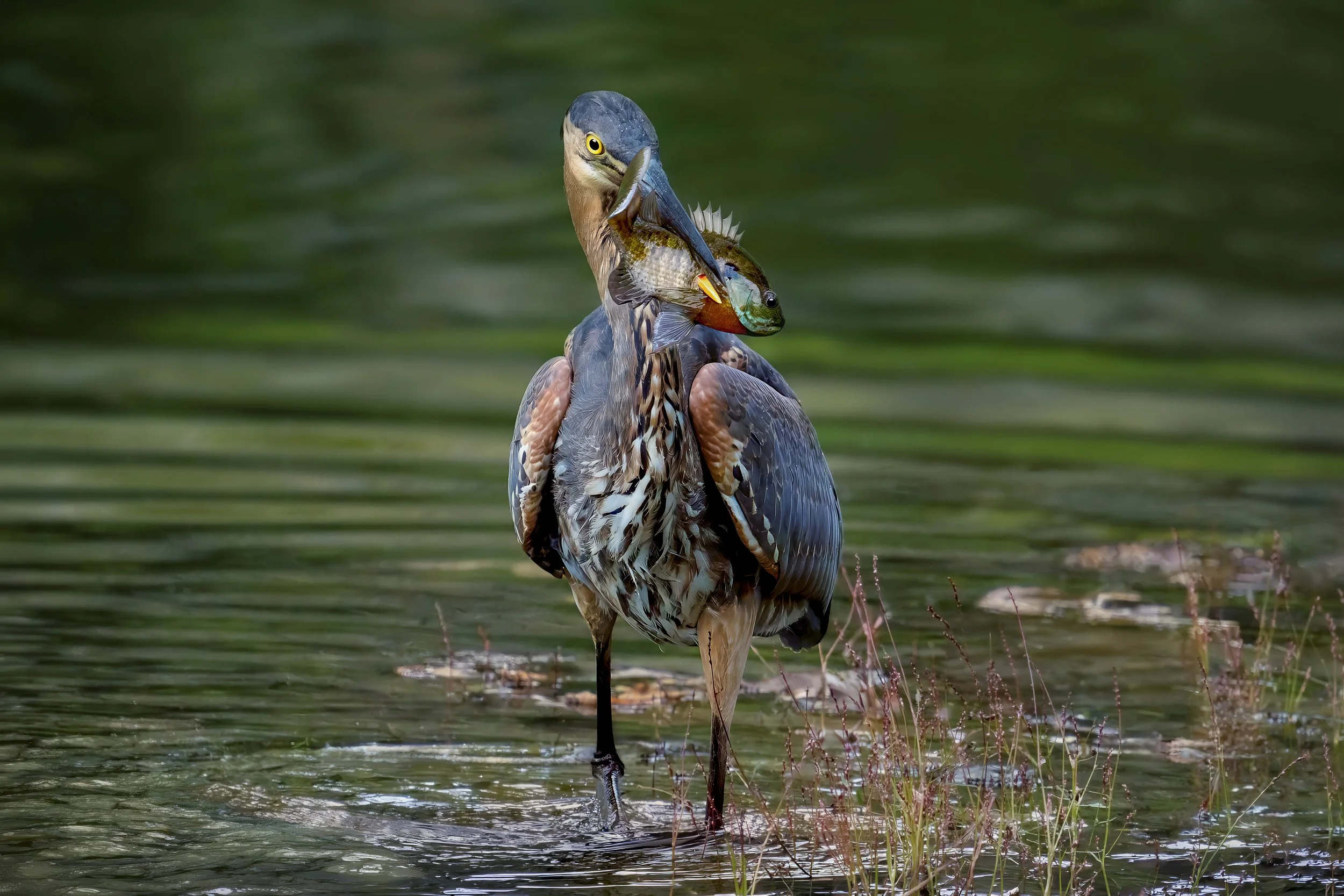
The heron's bill has actually penetrated the fish. It's an uncomfortable detail, but also an extraordinary demonstration of the speed, accuracy and force involved in the strike.
What makes the photograph even more interesting to me is the heron's expression. With its eye turned toward the camera and its catch firmly secured, it almost appears to realize that the entire event has been witnessed.
Hence the title:
Caught in the Act.
Beneath the Surface
The birds aren't the only wildlife living here.
Most of what happens beneath the pond's surface is invisible from the deck. Every so often, however, the water becomes clear enough—and the light cooperates enough—to reveal another part of this little ecosystem.
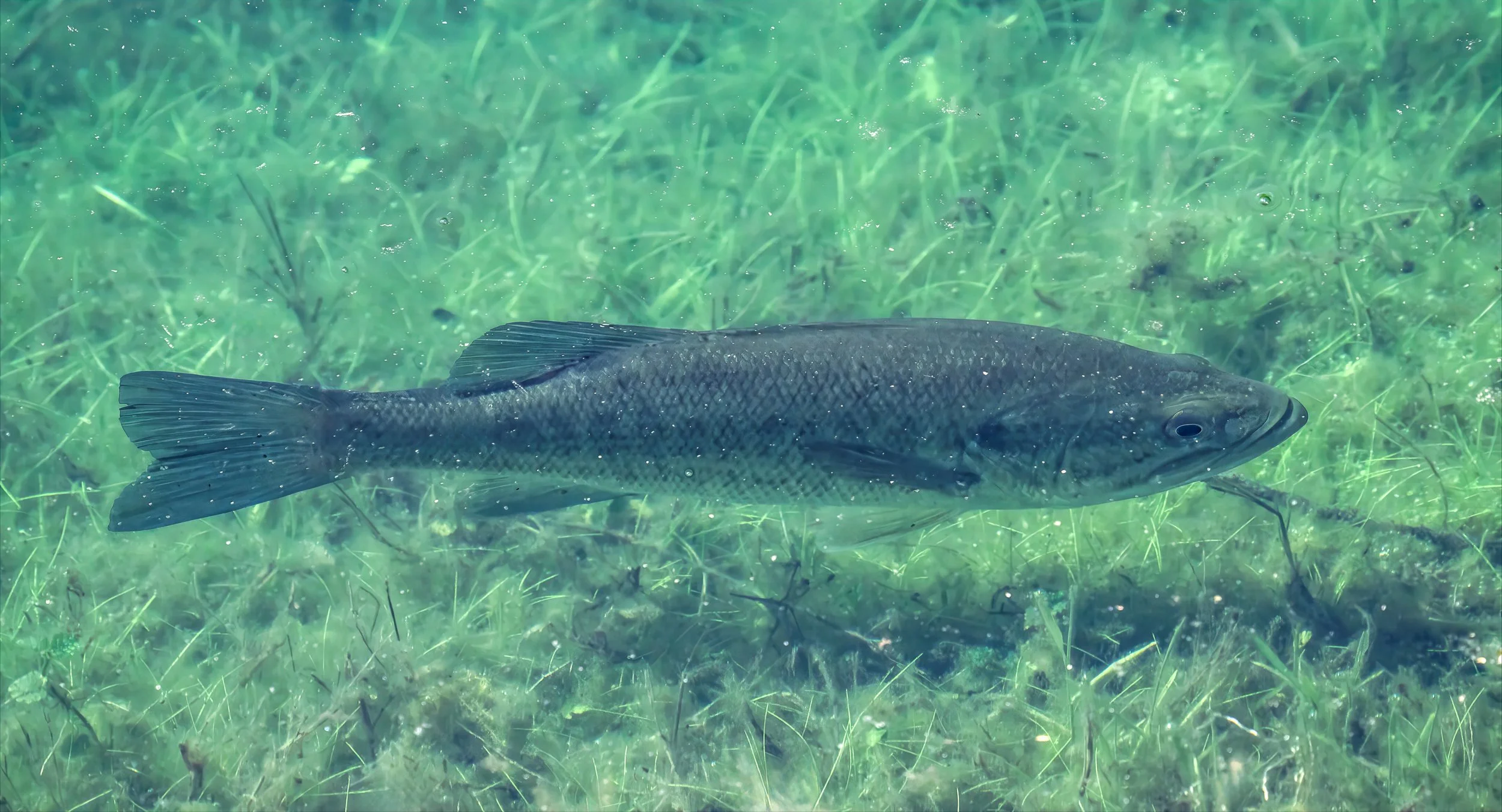
This isn't one of the most dramatic photographs in the collection, but I think it belongs here for a different reason.
The fish helps complete the story.
The kingfishers and herons don't repeatedly visit this pond by accident. Beneath the surface is a food source supporting the activity I'm able to photograph above it.
The photograph is a reminder that every dramatic fishing sequence begins with something we normally can't see.
Not every visitor is quite as delicate as a hummingbird—or as elegant as a heron.
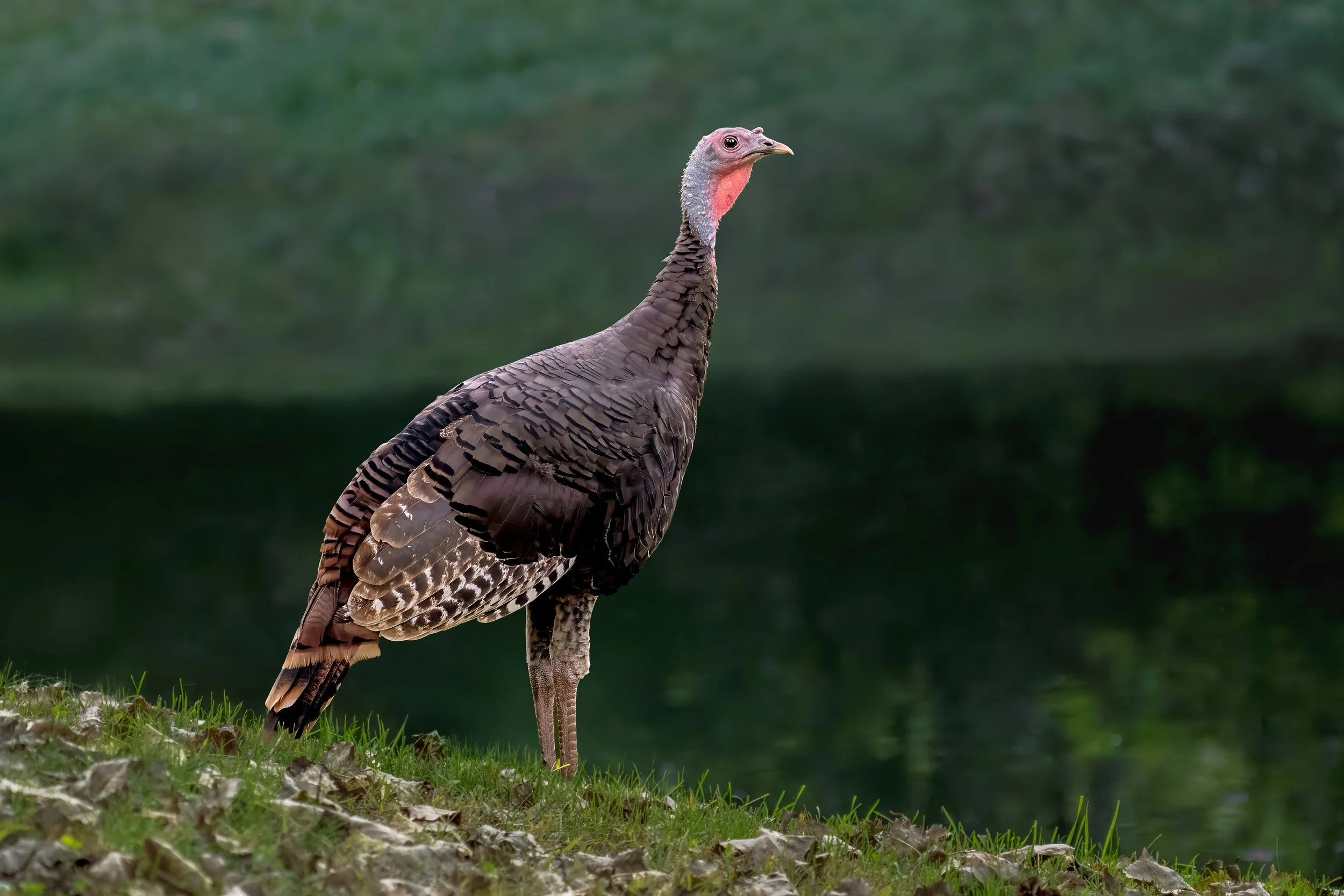
Wild turkeys occasionally wander through the neighborhood as well, another reminder that this little patch of habitat attracts wildlife of nearly every shape and size.
The dark water behind this bird gives the photograph an almost portrait-like quality, but the grassy shoreline keeps it firmly connected to the pond.
A wild turkey isn't exotic wildlife in northern Illinois. That's precisely why I like including it.
This collection isn't meant to suggest that every visitor is rare. It's about the diversity of wildlife sharing one surprisingly small space with the people who live around it.
A Different Kind of Visitor
And then there are animals I don't necessarily expect to see when I look out toward the pond.
Not Everything Lives in the Water
The pond attracts far more than waterfowl and fishing birds.
One visitor occasionally watches from above.
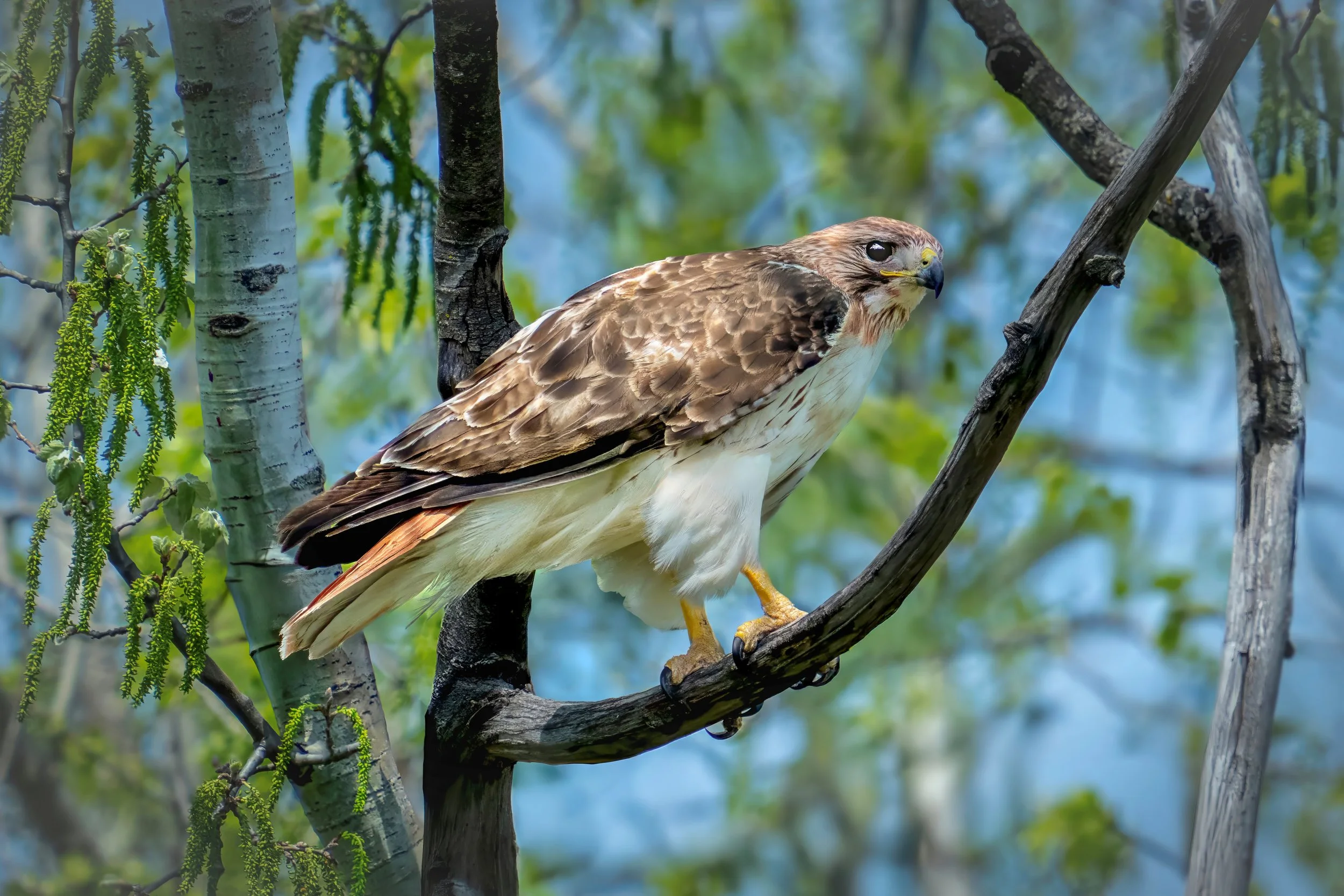
A Red-tailed Hawk overlooking the area changes the atmosphere almost immediately. Smaller birds become considerably more cautious when a large raptor appears nearby.
Other visitors are less intimidating.
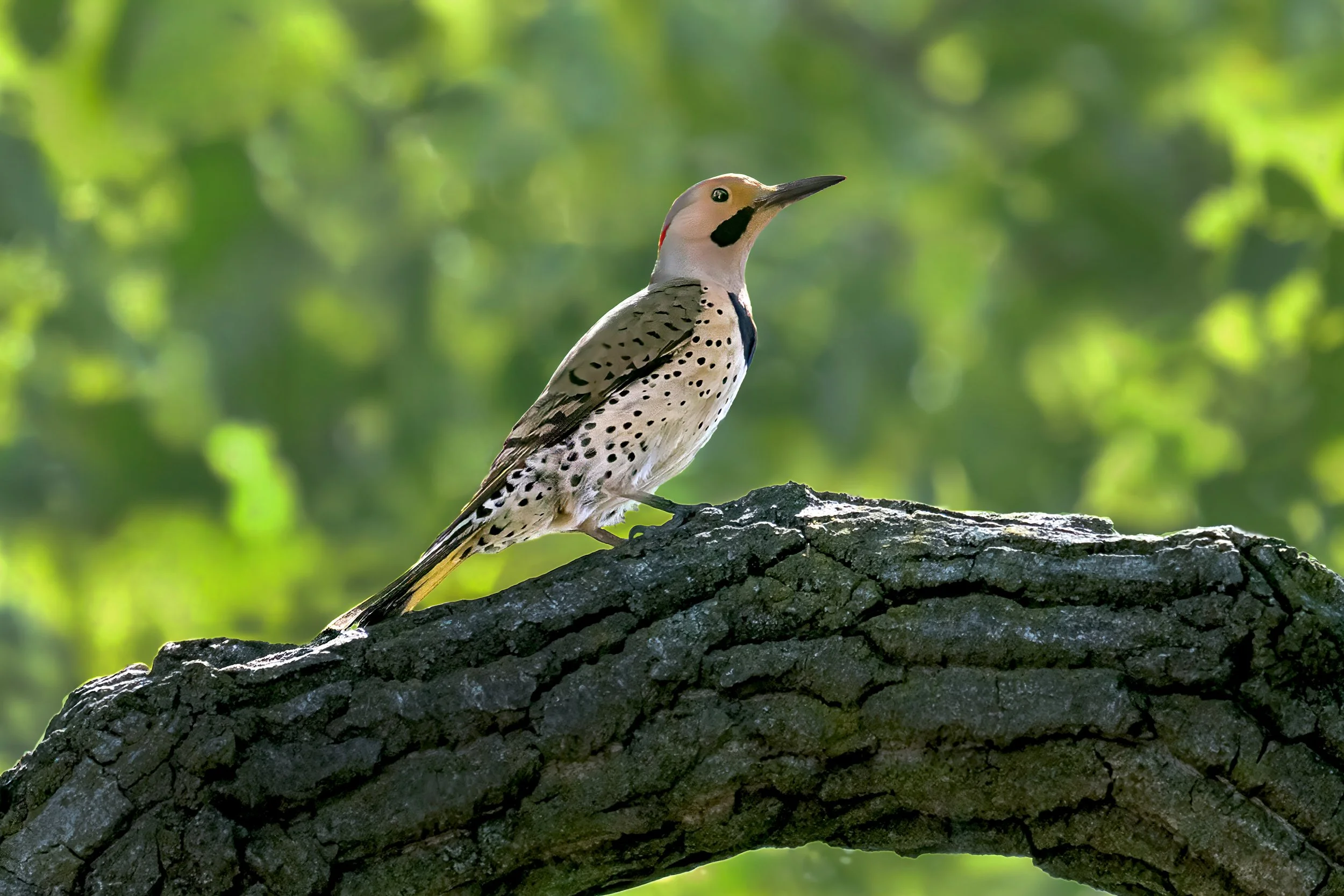
The Northern Flicker is technically a woodpecker, although I often see them spending as much time on or near the ground as clinging to trees.
And then there are birds so familiar that we sometimes stop noticing how beautiful they actually are.
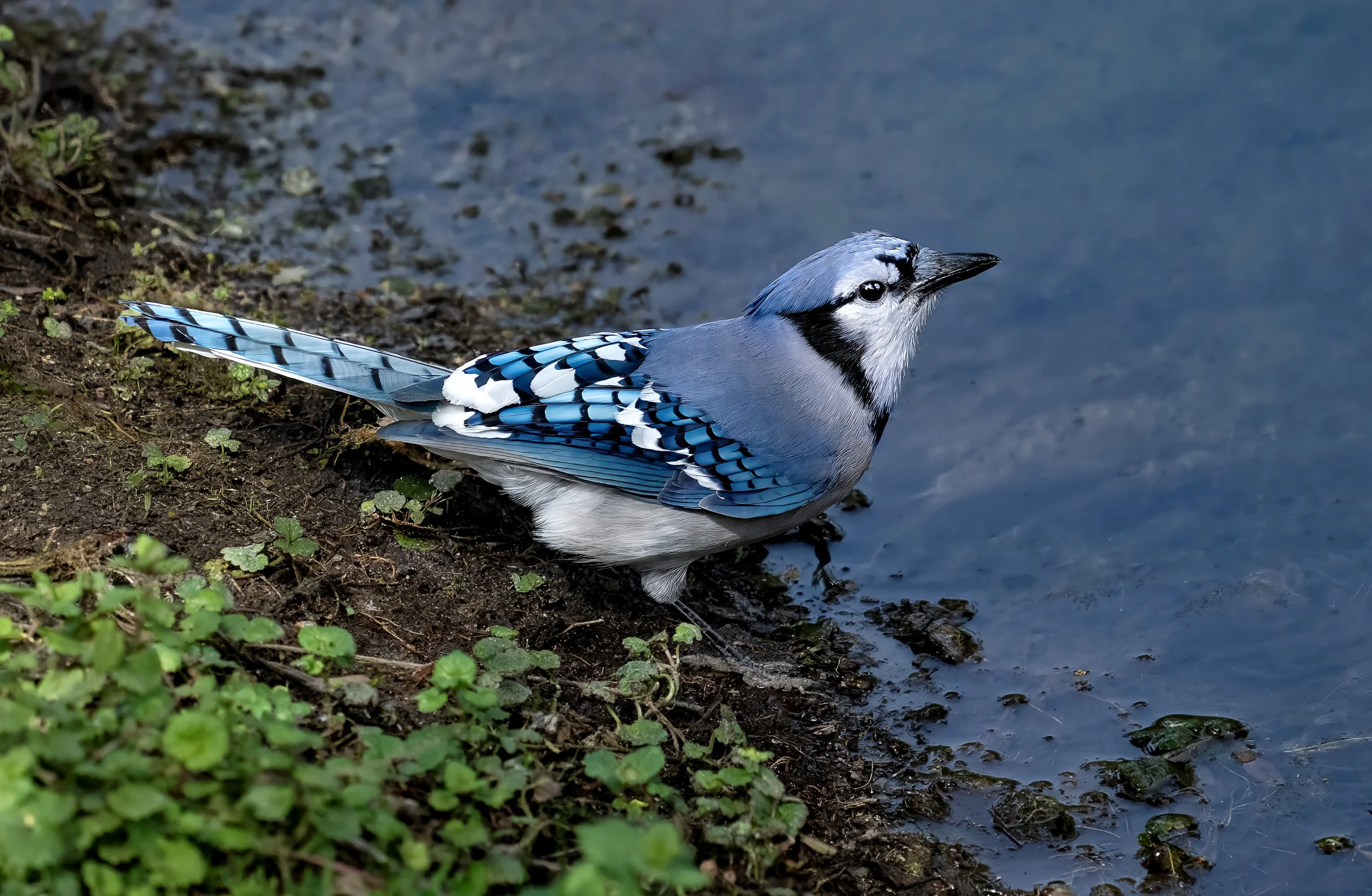
A Blue Jay certainly isn't an unusual sight in Illinois, but familiarity doesn't make it any less remarkable when viewed closely.
The intricate blue, black and white patterning of its wings and tail is extraordinary. In this photograph, I particularly like having the shoreline and blue-gray pond water visible around the bird. It connects what could otherwise be a conventional bird portrait directly to the place where this entire collection was photographed.
Sometimes wildlife photography isn't about finding something rare.
Sometimes it's about seeing something familiar more carefully.
A Different Kind of Heron
One of the more unusual photographic opportunities came from another heron—one much smaller and less conspicuous than the Great Blue.
Green Herons can be remarkably secretive. They're often partially hidden among shoreline vegetation and can disappear into the surroundings surprisingly well.
But occasionally one appears in exactly the right position as it shakes of water and looks for another opportunity to catch its dinner.
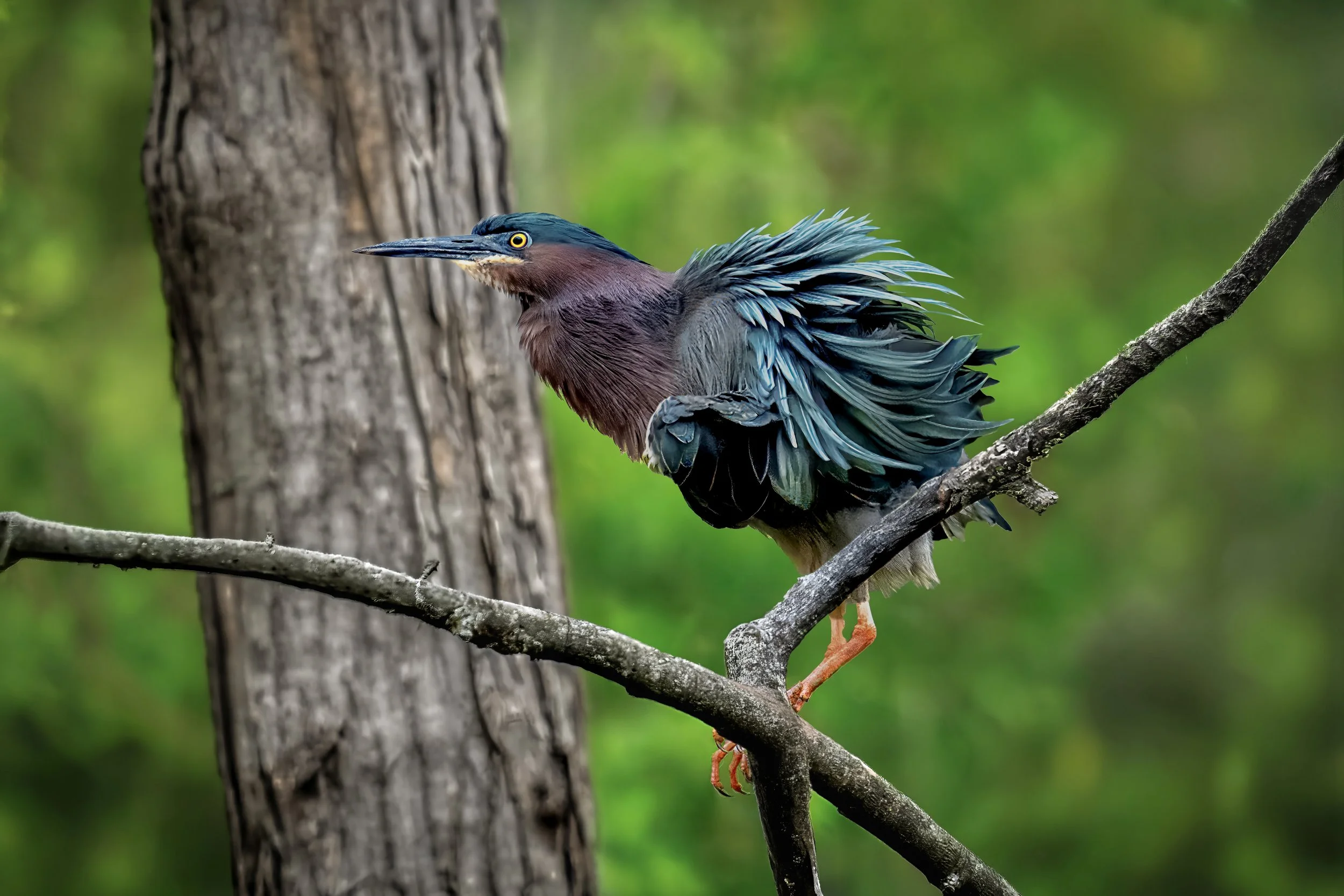
These are the moments that make having a camera within reach worthwhile. There isn't time to plan the photograph or reposition the subject. The challenge is recognizing what's about to happen and being ready when it does.
The Pondside Sentinel
Some birds seem almost designed for the pond.
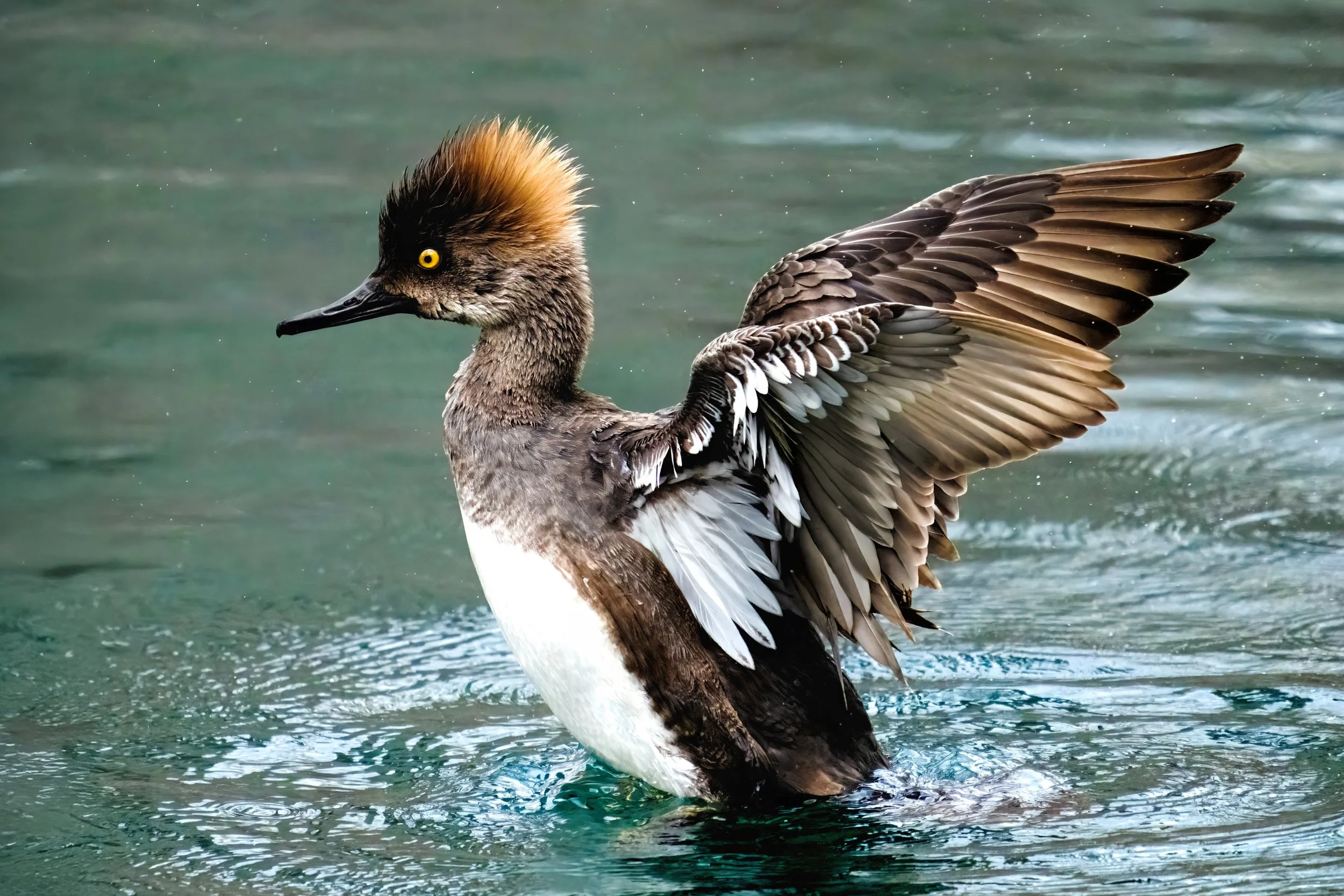
Double-crested Cormorants are extraordinary swimmers and remarkably effective underwater hunters. They're also unmistakable when they climb out of the water and assume their familiar wings-out posture.
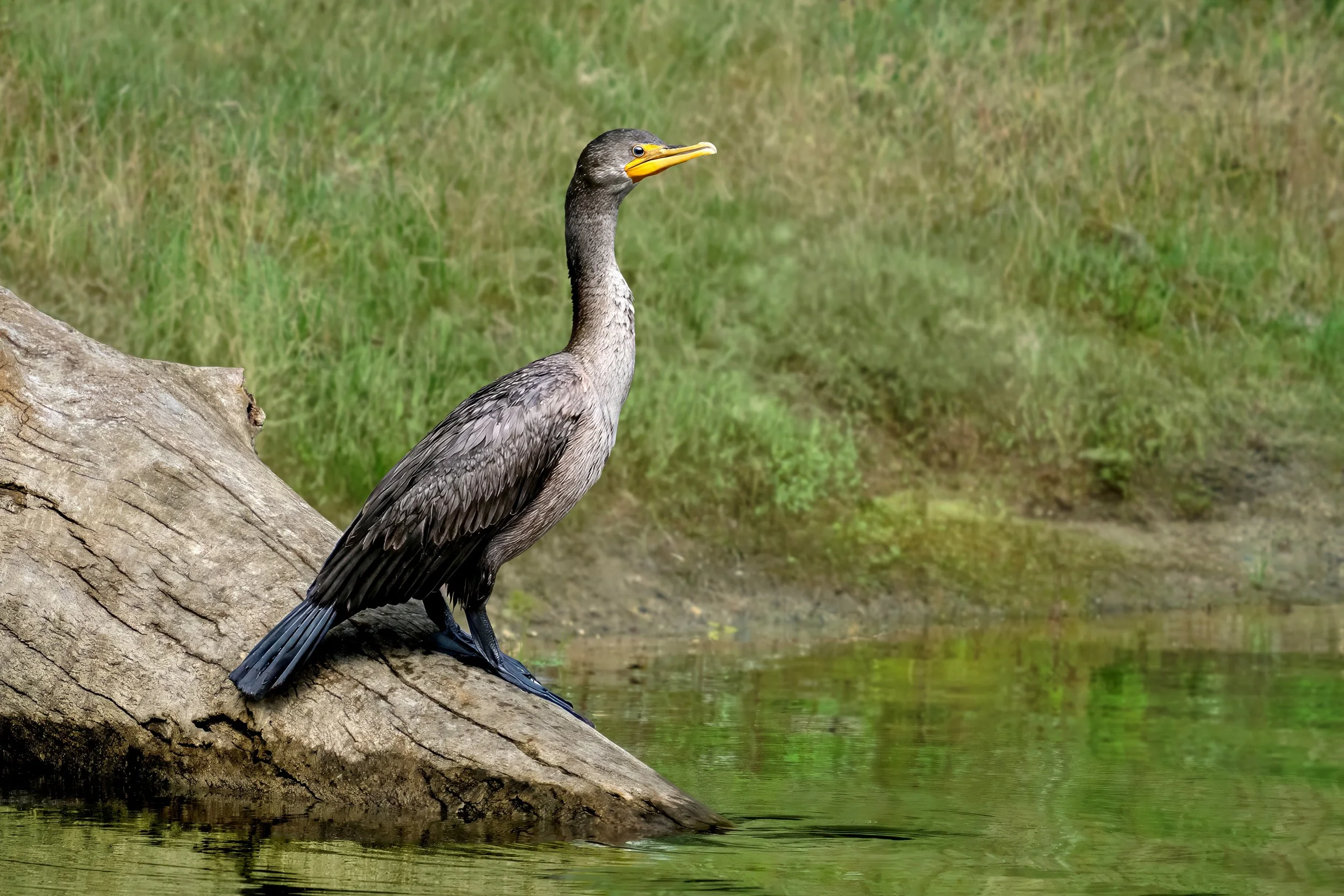
The pose can look almost ceremonial, but there is a practical reason for it: cormorants commonly spread their wings after swimming.
The bird can look stately and composed one moment...
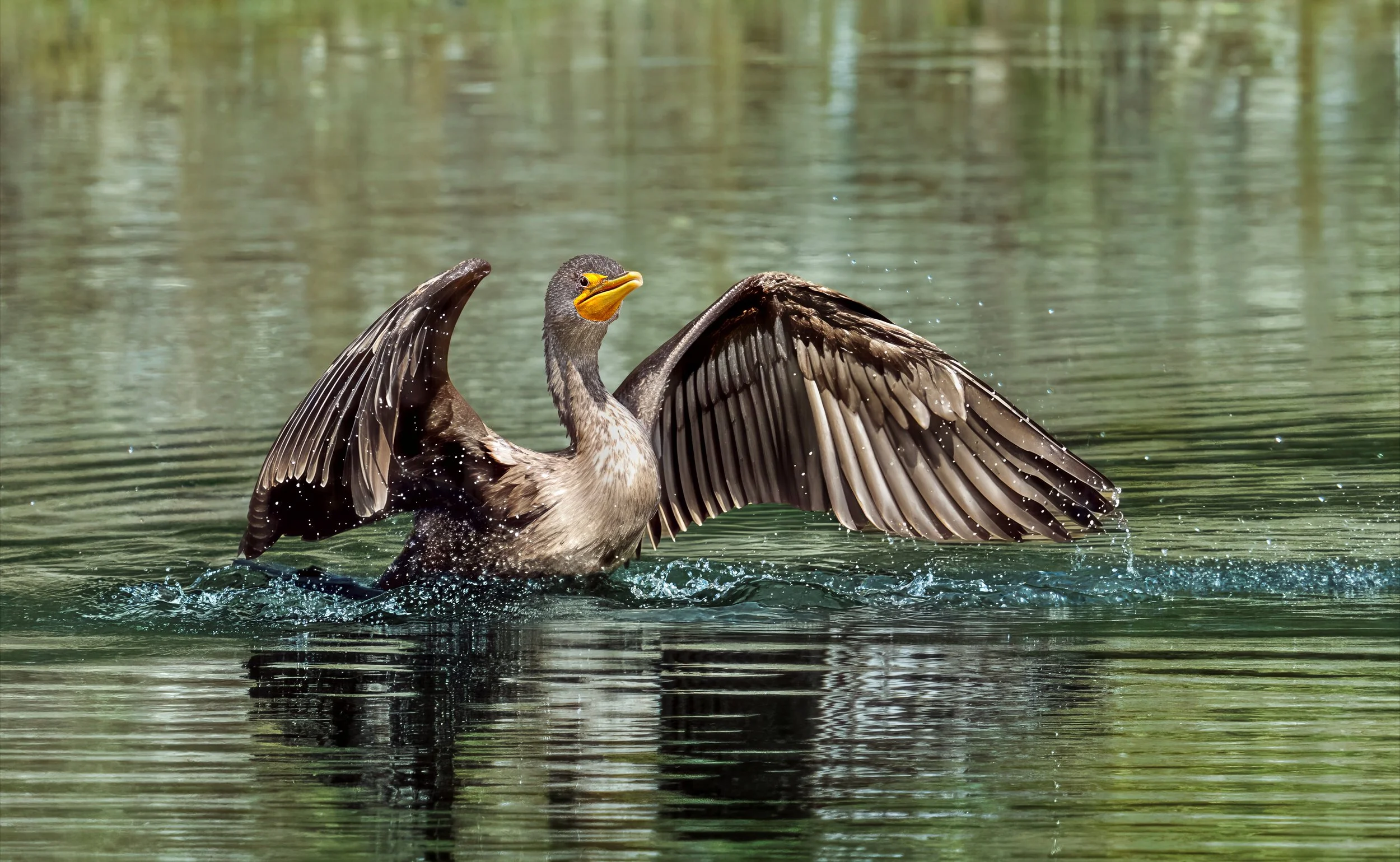
...and considerably less composed the next.
Making an Entrance
This photograph captures exactly the kind of instant that keeps wildlife photography interesting.
The extended wings reveal details that aren't visible when the bird is sitting quietly, while the splashing water gives the photograph movement and energy.
It's the same species as the bird in Pondside Sentinel, but an entirely different photograph.
One documents the bird.
The other documents the moment.
The Smallest Visitors
At the opposite end of the size spectrum are some of my favorite summer visitors.
Ruby-throated Hummingbirds may weigh only a few grams, but photographically they can be among the most challenging birds around the pond.
Their speed is remarkable, their direction changes are unpredictable, and the position of the wings can completely transform a photograph from one frame to the next.
Sometimes, though, everything comes together.
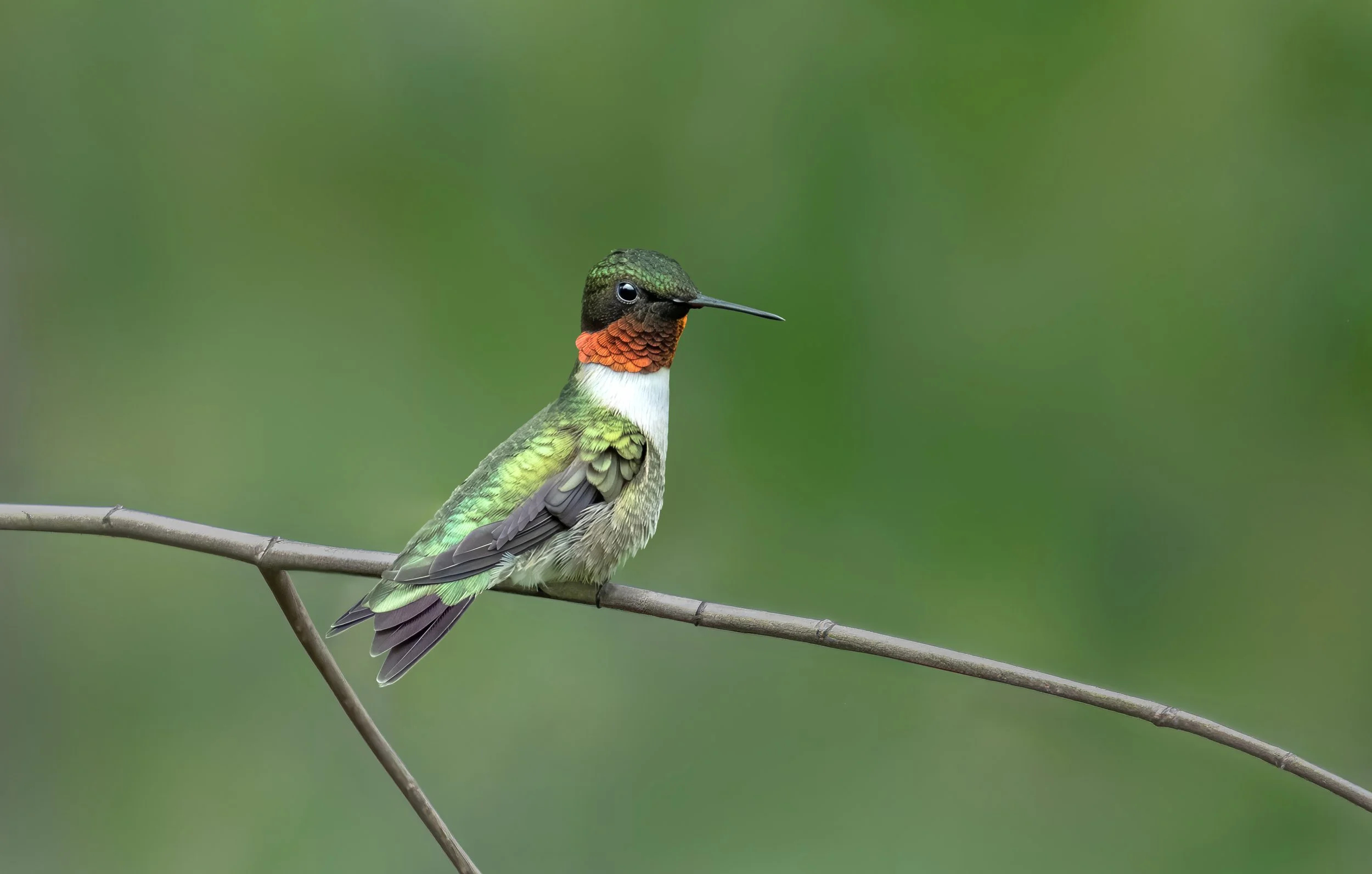
The iridescent throat of the male can appear almost black until the light reaches it at exactly the right angle. Then it suddenly becomes brilliant red.
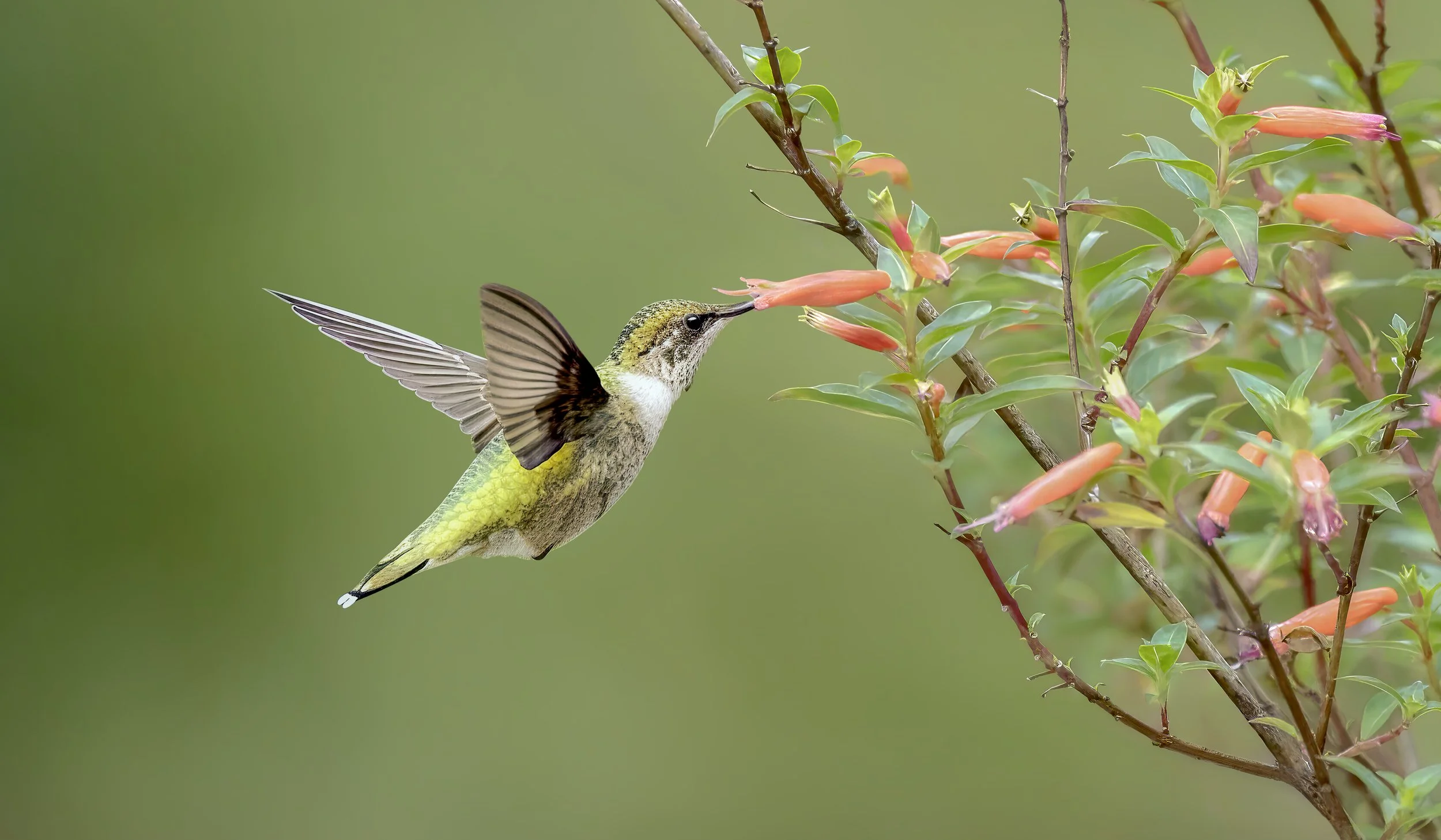
Photographs involving flowers provide context and color, but I also like images that strip the scene down to almost nothing but the bird itself.
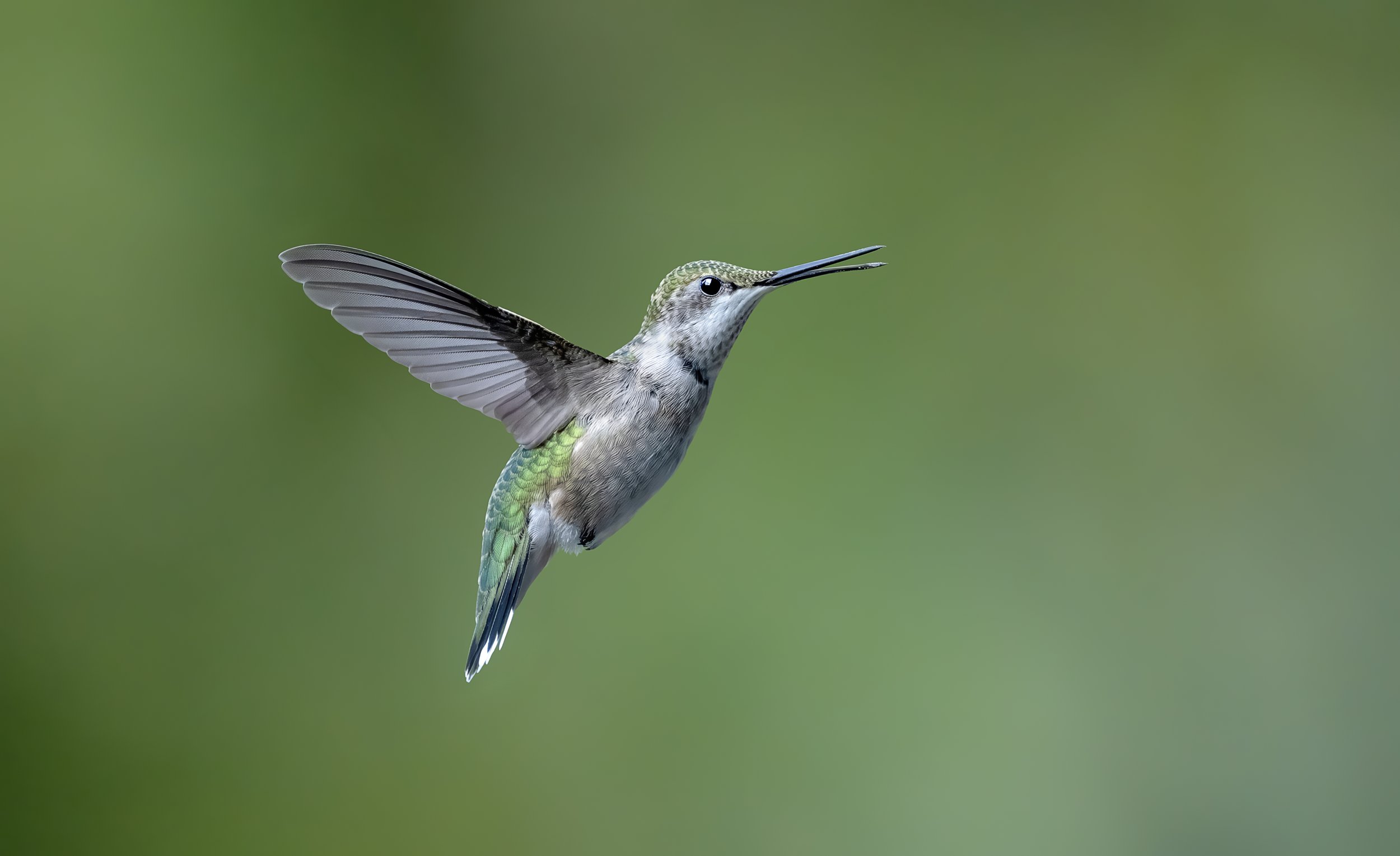
With no flower or branch competing for attention, the photograph becomes a study of the bird's structure: individual feathers, the tiny feet tucked beneath the body, the long bill and the extraordinary mechanics of flight.
These photographs are another reminder that dramatic wildlife doesn't necessarily have to be large.
Sometimes it fits in the palm of your hand.
Never Assume It's Just Another Day
One of the lessons I've learned from photographing this pond is that familiarity can be deceptive.
I've looked across the same water thousands of times.
Most days, nothing extraordinary happens.
And that's precisely why it can be so easy to stop looking.
But somewhere between the ordinary mornings have been a heron spearing a fish, a kingfisher returning with its catch, a cormorant throwing water from its wings, a Wood Duck drifting through the reflections, a hawk watching from above, a turkey strolling along the shoreline and hummingbirds seemingly suspended in midair.
Even the Blue Jay I've seen countless times becomes extraordinary when I stop long enough to really look at it.
None of these photographs required an expedition.
For many of them, I didn't even need shoes.
They were photographed from the deck behind my home in the middle of Rockton, Illinois.
That may be my favorite thing about this collection.
Wildlife photography often encourages us to search for extraordinary places. But sometimes an ordinary place becomes extraordinary simply because we pay attention to it.
And sometimes the next photograph is already waiting—
just outside the back door.