Through the Canadian Rockies
Six Days in Jasper, Banff & Yoho National Parks | 2023
Some places are beautiful in photographs.
Others make you realize that photographs can only begin to describe them.
In the summer of 2023, Teralyn and I spent six days traveling through the Canadian Rockies, beginning in Jasper National Park and following the mountains south through Banff before crossing into British Columbia and Yoho National Park.
For six days, turquoise glacial lakes, rushing rivers, waterfalls, glaciers and seemingly endless mountain ranges became our surroundings.
For a photographer, it was almost overwhelming.
Everywhere I looked, there was another photograph.
Jasper National Park
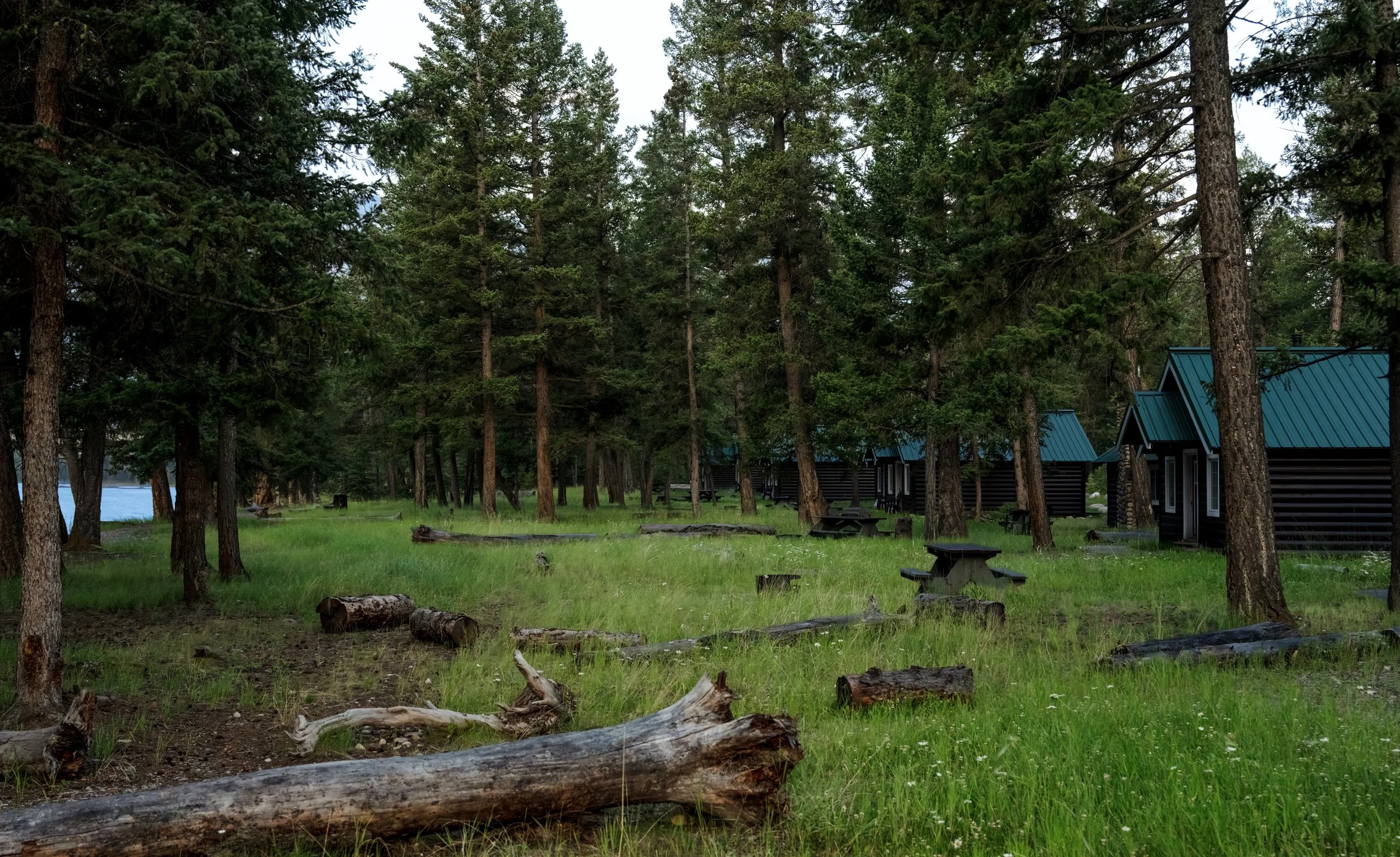
Our journey began in Jasper, where we spent our first two nights at Pine Bungalows, a collection of rustic cabins tucked among the trees just north of downtown Jasper.
It was exactly the sort of place we had hoped to find in the Canadian Rockies—quiet, wooded and surrounded by mountains.
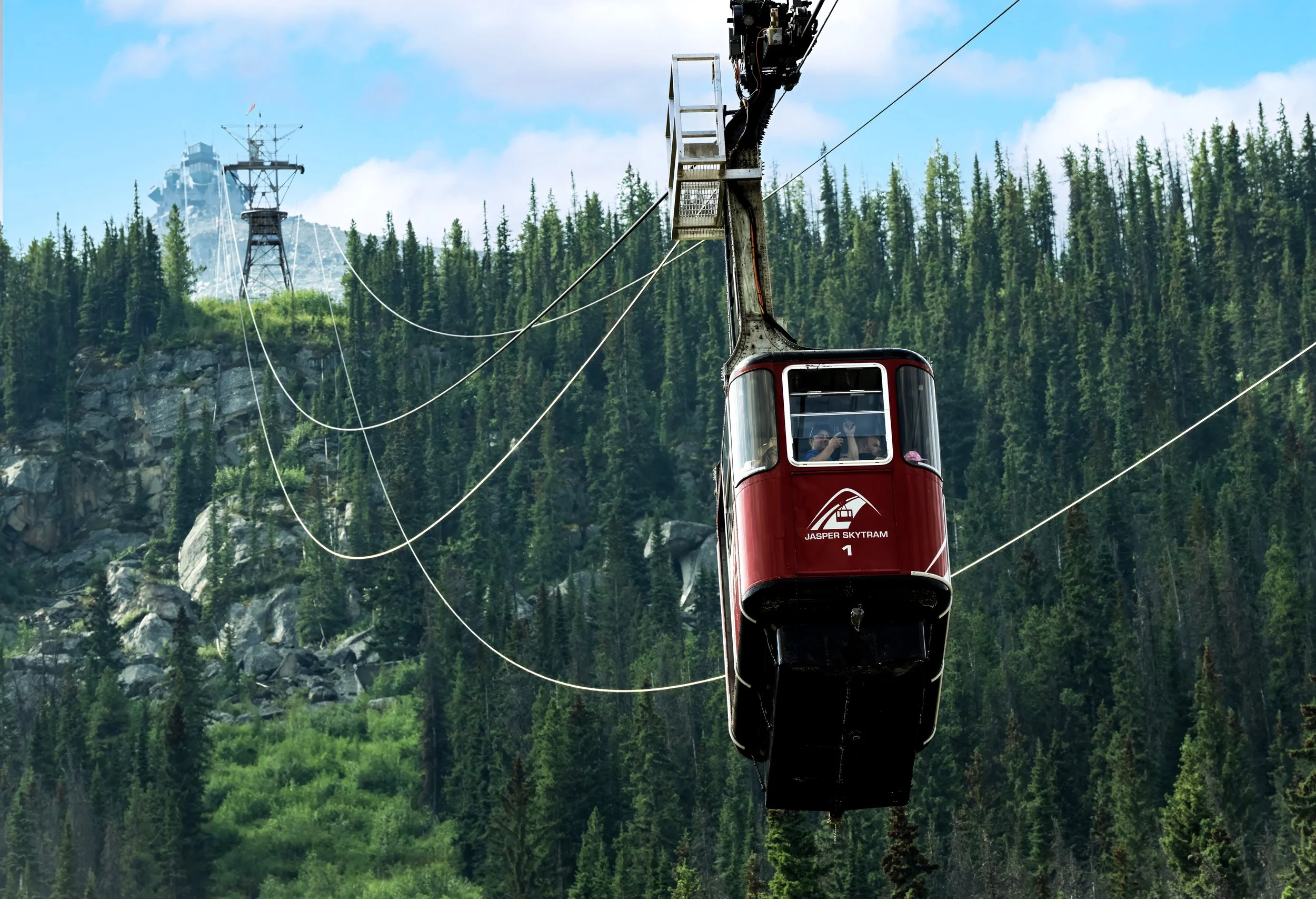
During our two days in Jasper National Park, we explored the surrounding mountains and forests, including a ride aboard the Jasper SkyTram.
The tram carried us high above the valley toward Whistlers Mountain, providing an entirely different perspective on the enormous landscape surrounding Jasper.
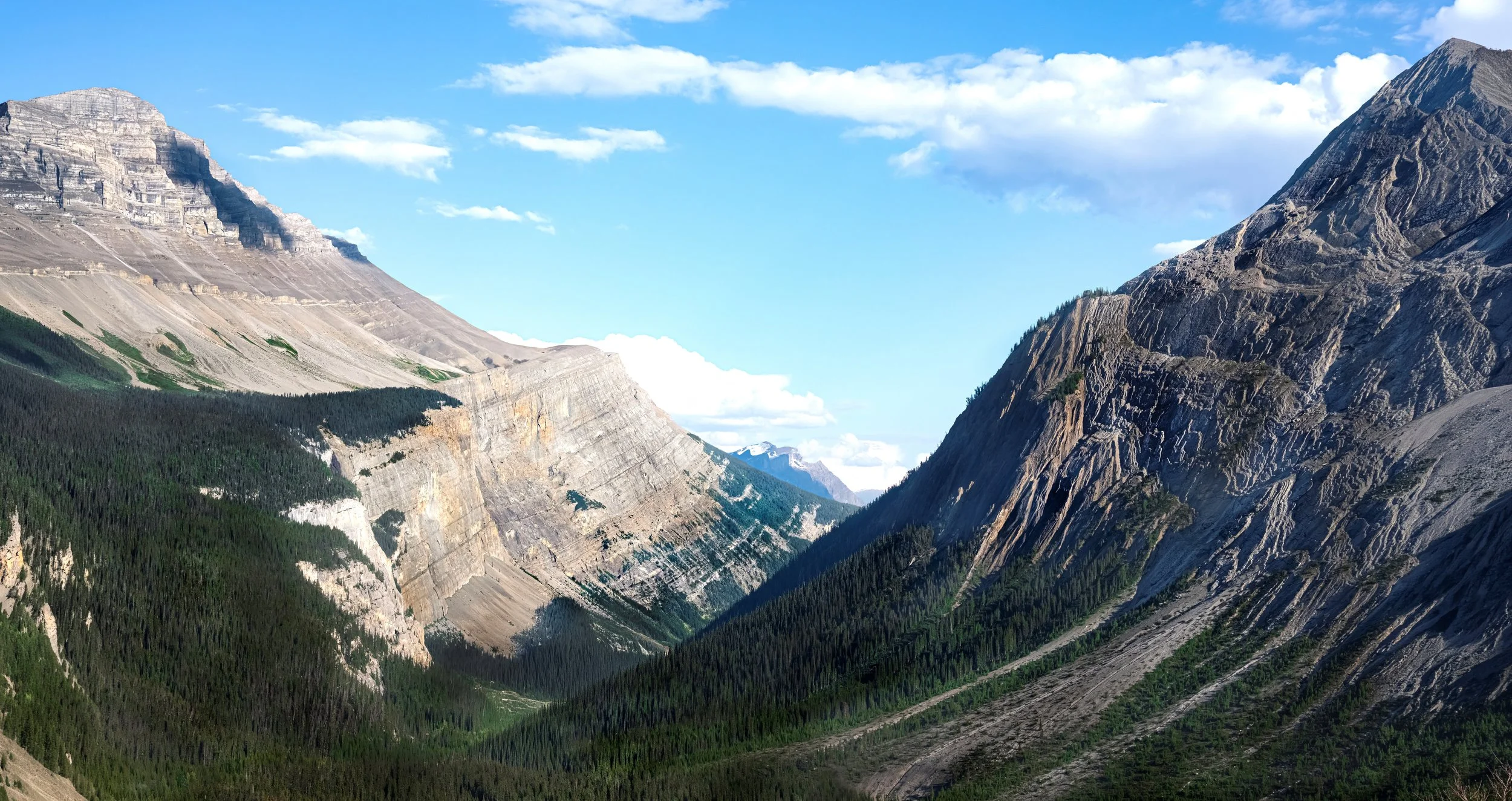
But one of the most memorable experiences of our time in Jasper came with our feet firmly on the ground.
We hiked the entire five-mile Valley of the Five Lakes Trail, winding through dense forest and past a series of mountain lakes whose water seemed to change from one remarkable shade of blue and green to another.
At the time, it was simply a beautiful hike through Jasper.
Today, I look back at it differently
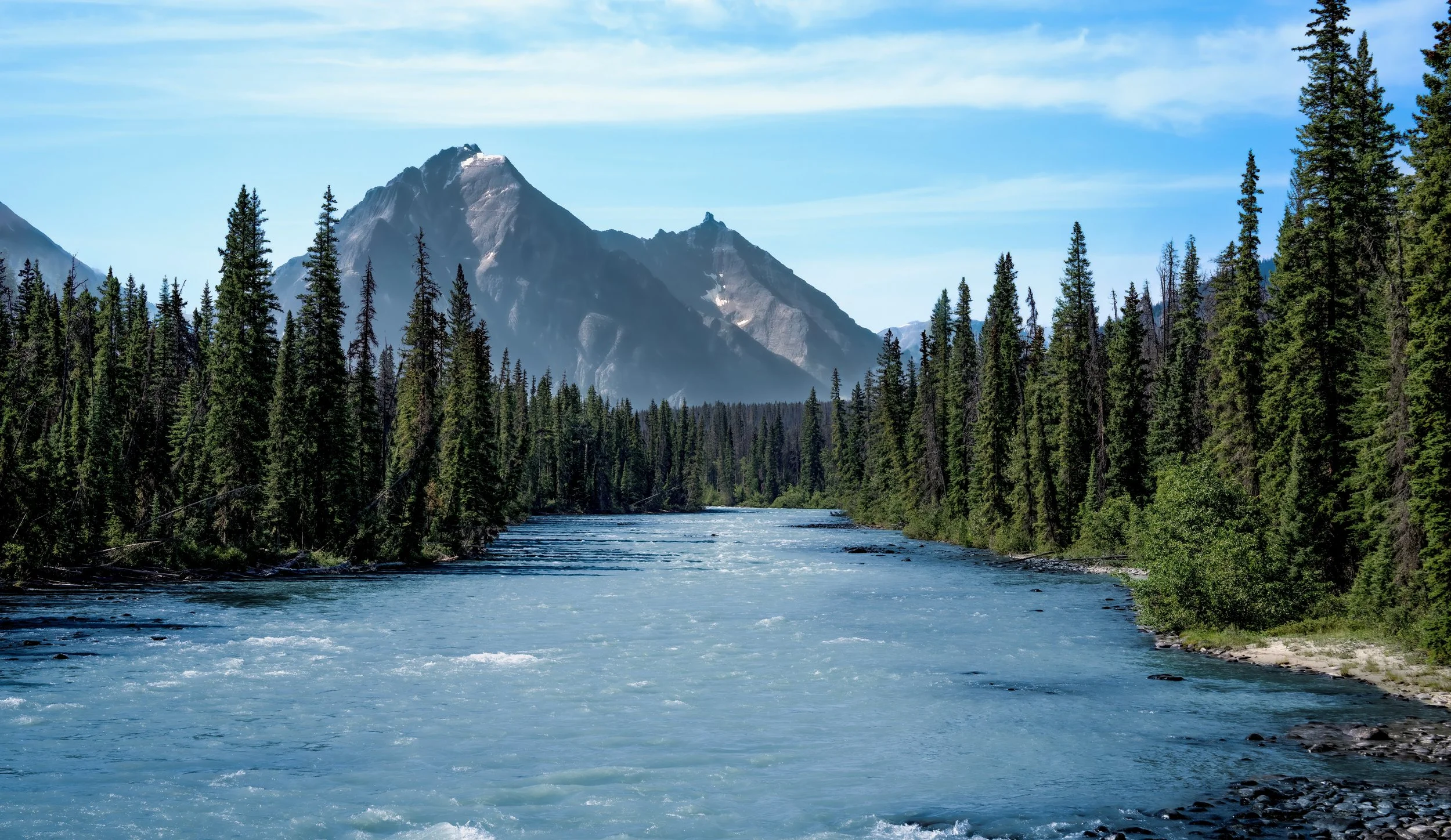
In July 2024—only a year after our visit—catastrophic wildfires swept through Jasper National Park and eventually into the town itself.
Areas through which we had hiked were devastated.
Places we had visited disappeared.
Even some of the smaller memories of the trip suddenly became more significant. During our stay, Teralyn and I enjoyed several meals at The Birch Kitchen + Bar in Jasper. It was simply one of those places that became part of our experience there.
It, too, was destroyed by the fire.
When I made these photographs in 2023, I was simply trying to capture a beautiful place.
I couldn't have known that some of them would also become a record of a landscape as we had known it before the fire.
The Icefields Parkway
Eventually it was time to leave Jasper and begin our journey south toward Banff.
But getting from one park to the other wasn't simply transportation.
The drive itself became one of the highlights of the trip.
The Icefields Parkway winds for more than 140 miles through the heart of the Canadian Rockies, passing beneath enormous peaks and alongside glaciers, waterfalls, turquoise rivers and valleys that seem to disappear endlessly into the mountains.
It was one of those rare drives when getting back into the car could almost feel frustrating.
Every few miles, there seemed to be another reason to stop.
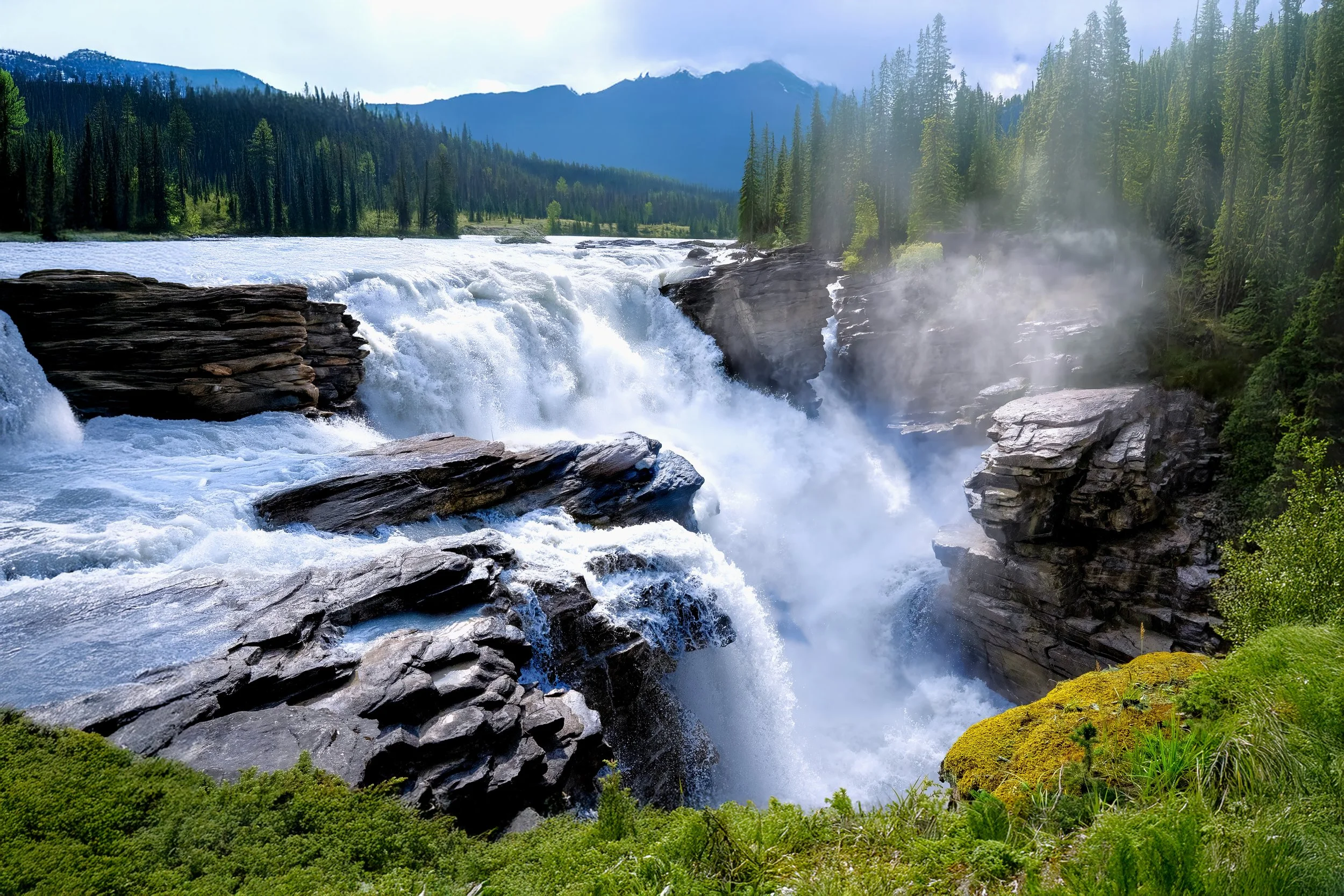
One of those stops was Athabasca Falls.
Here, the enormous Athabasca River is suddenly forced through a narrow gorge, creating an extraordinary display of the power of moving water.
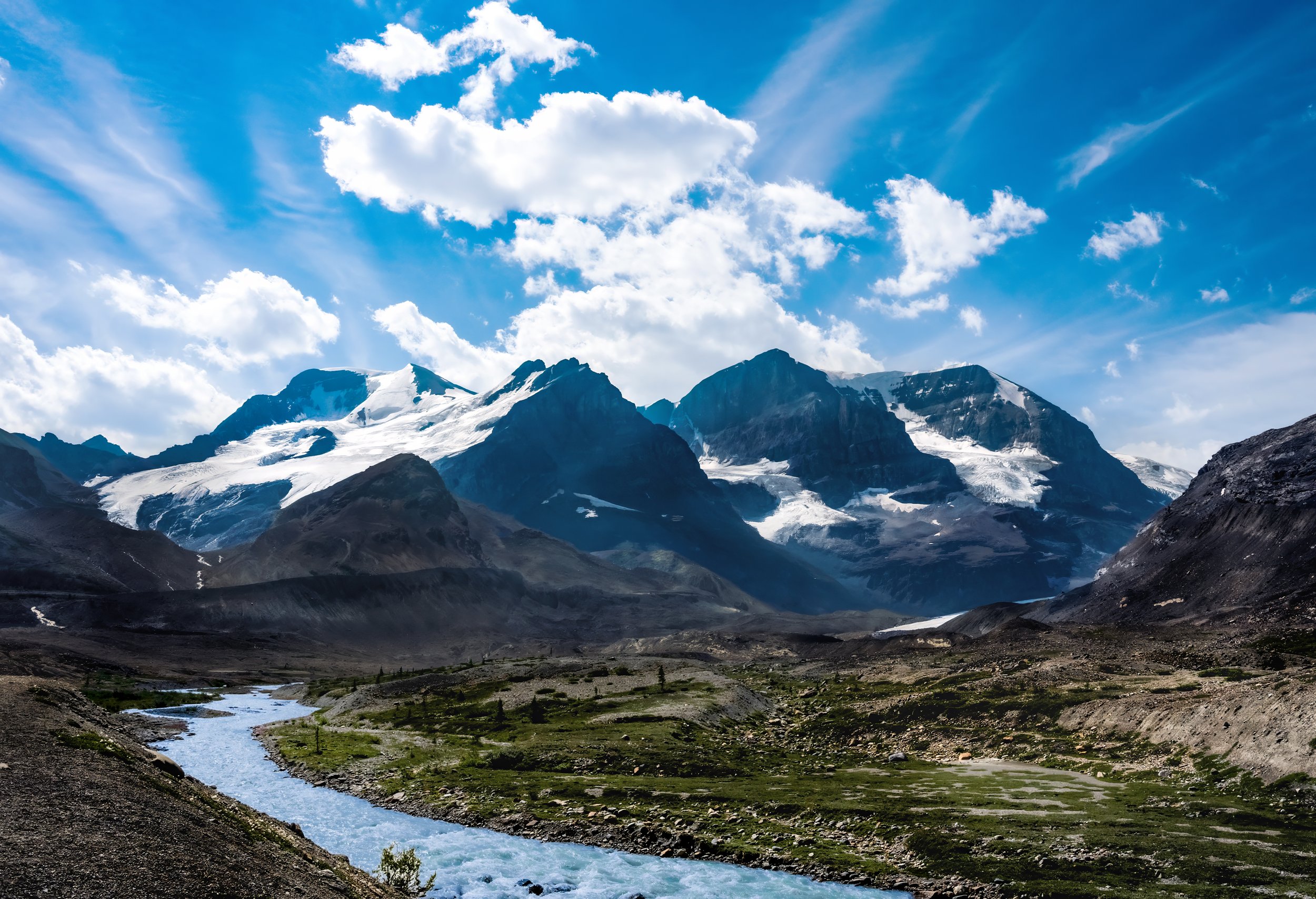
Farther south, the landscape changed again as we reached the Columbia Icefield.
Standing near a glacier provides an entirely different sense of scale. Mountains that already appear enormous suddenly become part of something even larger—a landscape shaped over thousands of years by moving ice.
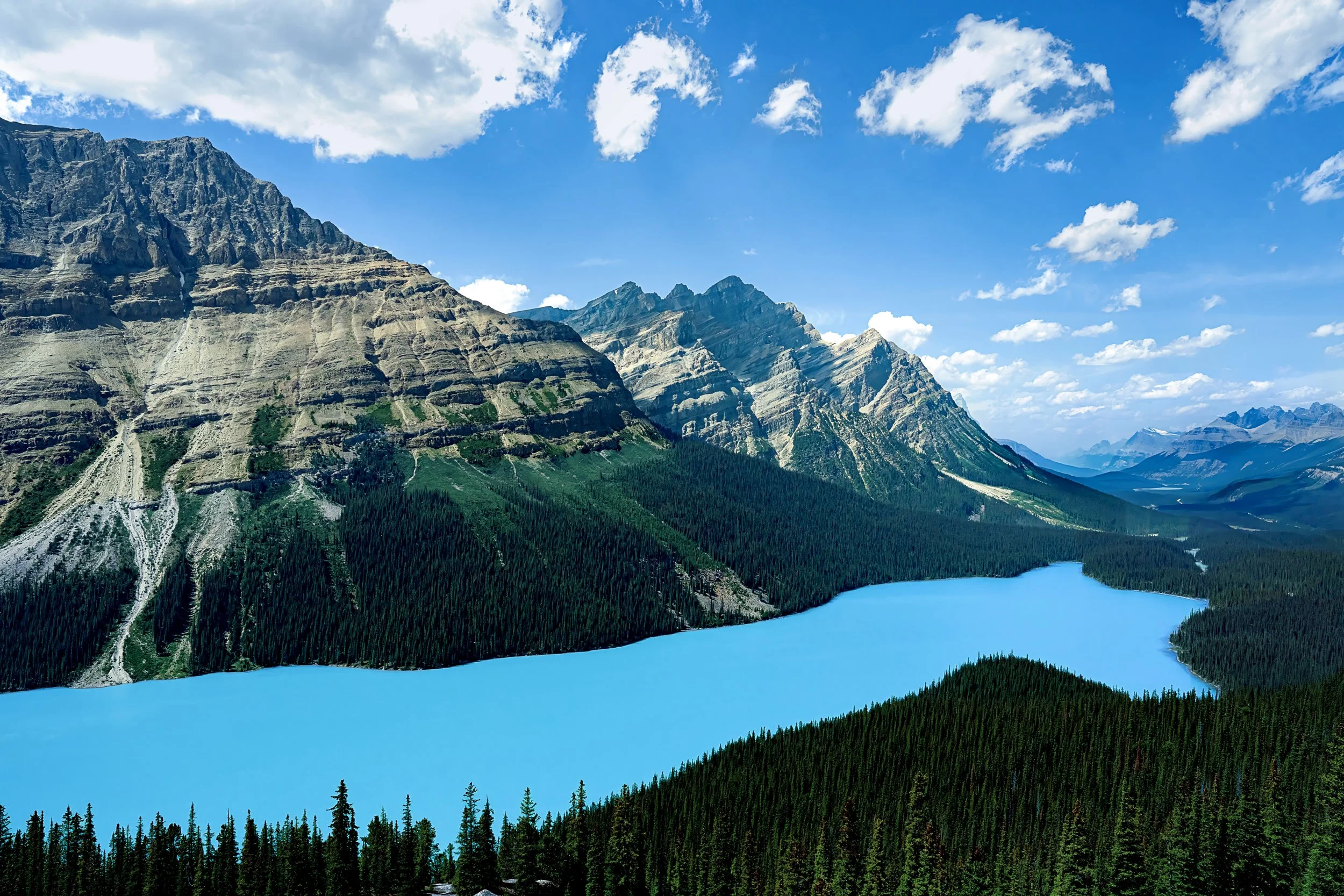
And then came Peyto Lake.
Even after several days surrounded by the extraordinary colors of the Canadian Rockies, the first view from above was astonishing.
The glacial water almost seemed illuminated from within, an intense turquoise ribbon surrounded by mountains and dark evergreen forest.
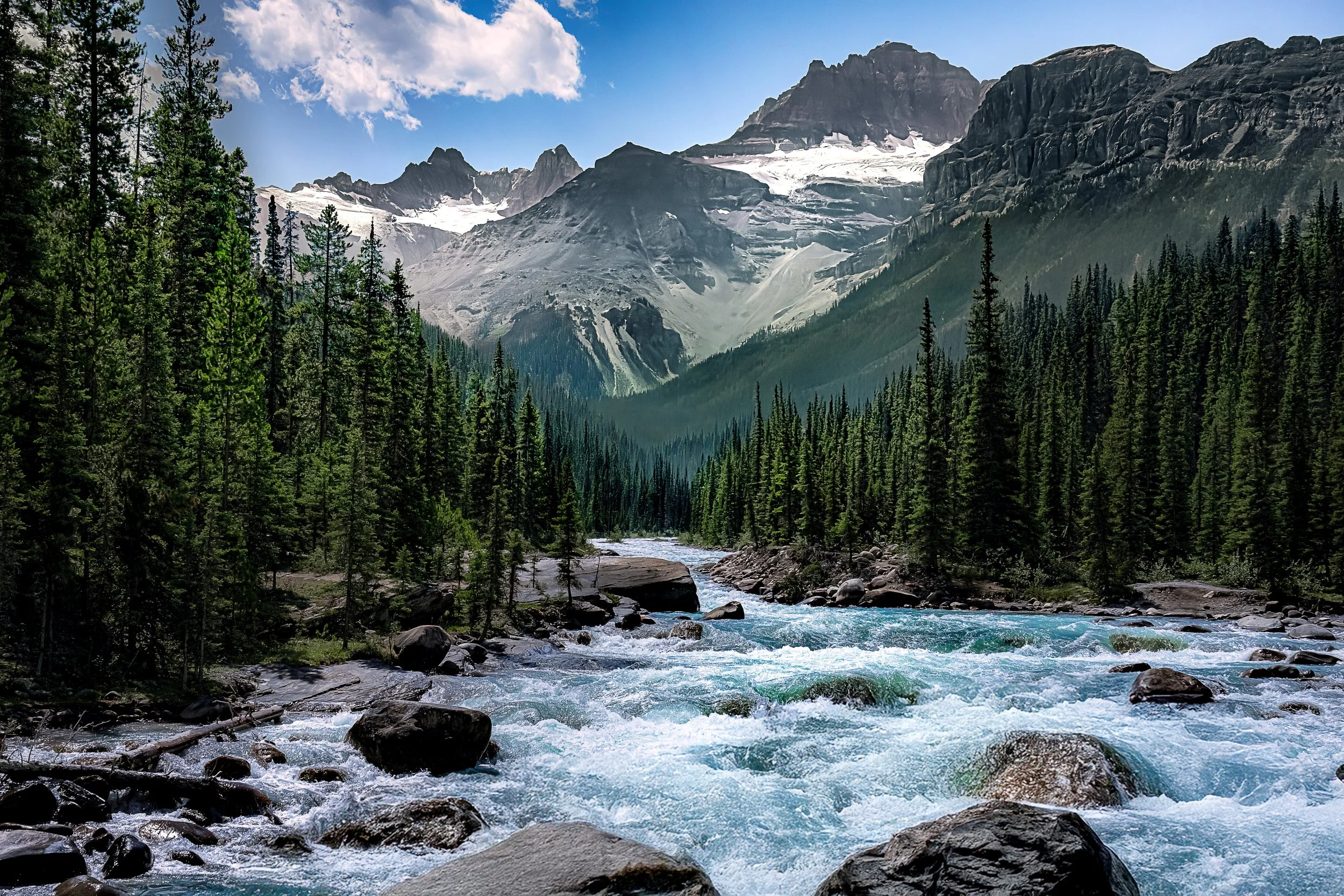
Farther along the parkway, we stopped again at Mistaya Canyon, where rushing glacial water has carved its way through the rock.
It was another reminder that this seemingly permanent landscape is actually constantly changing—shaped by water, ice, weather and time.
Banff National Park
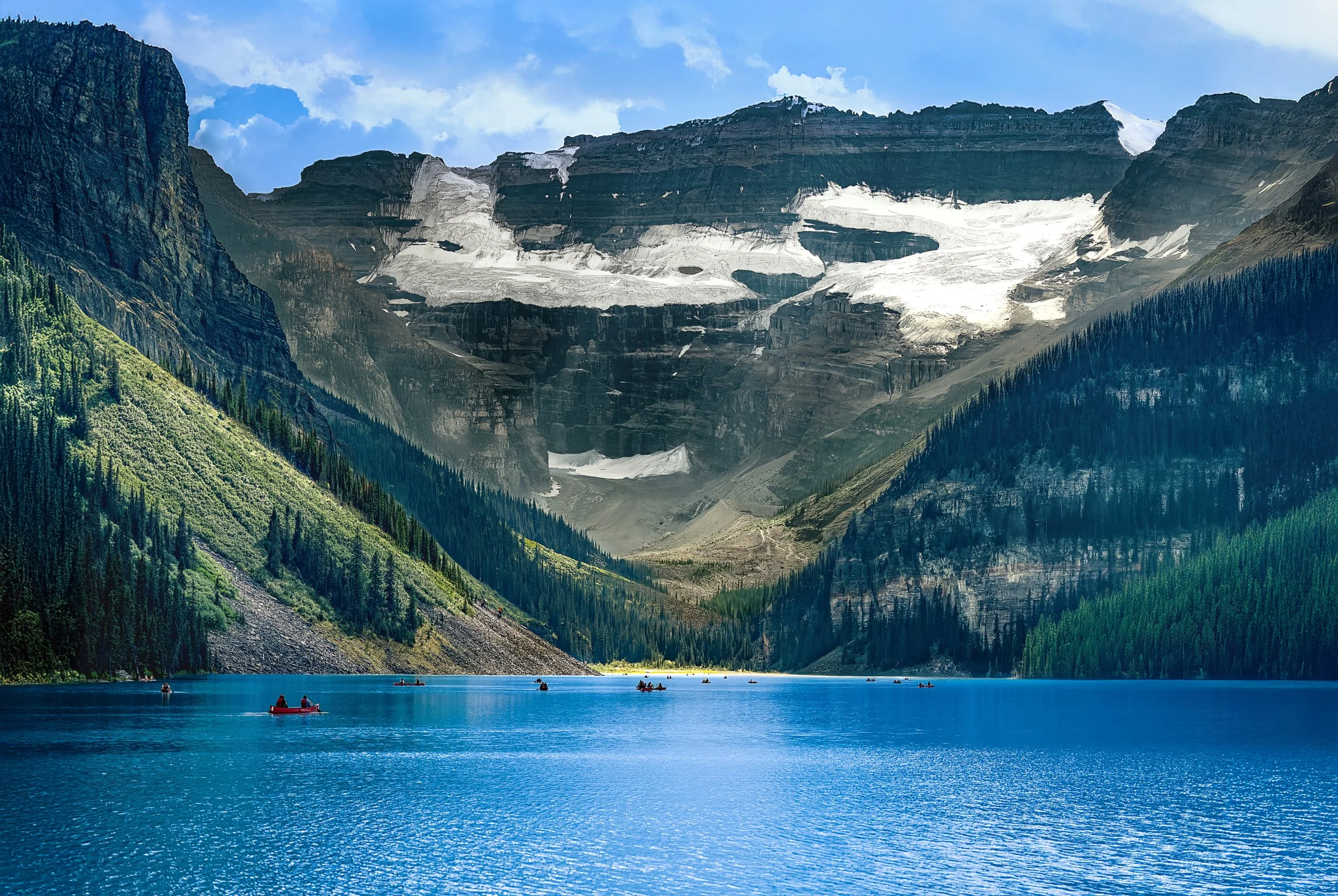
If there is one visual signature of Banff, it may be the almost impossible color of its lakes.
Lake Louise certainly didn't disappoint.
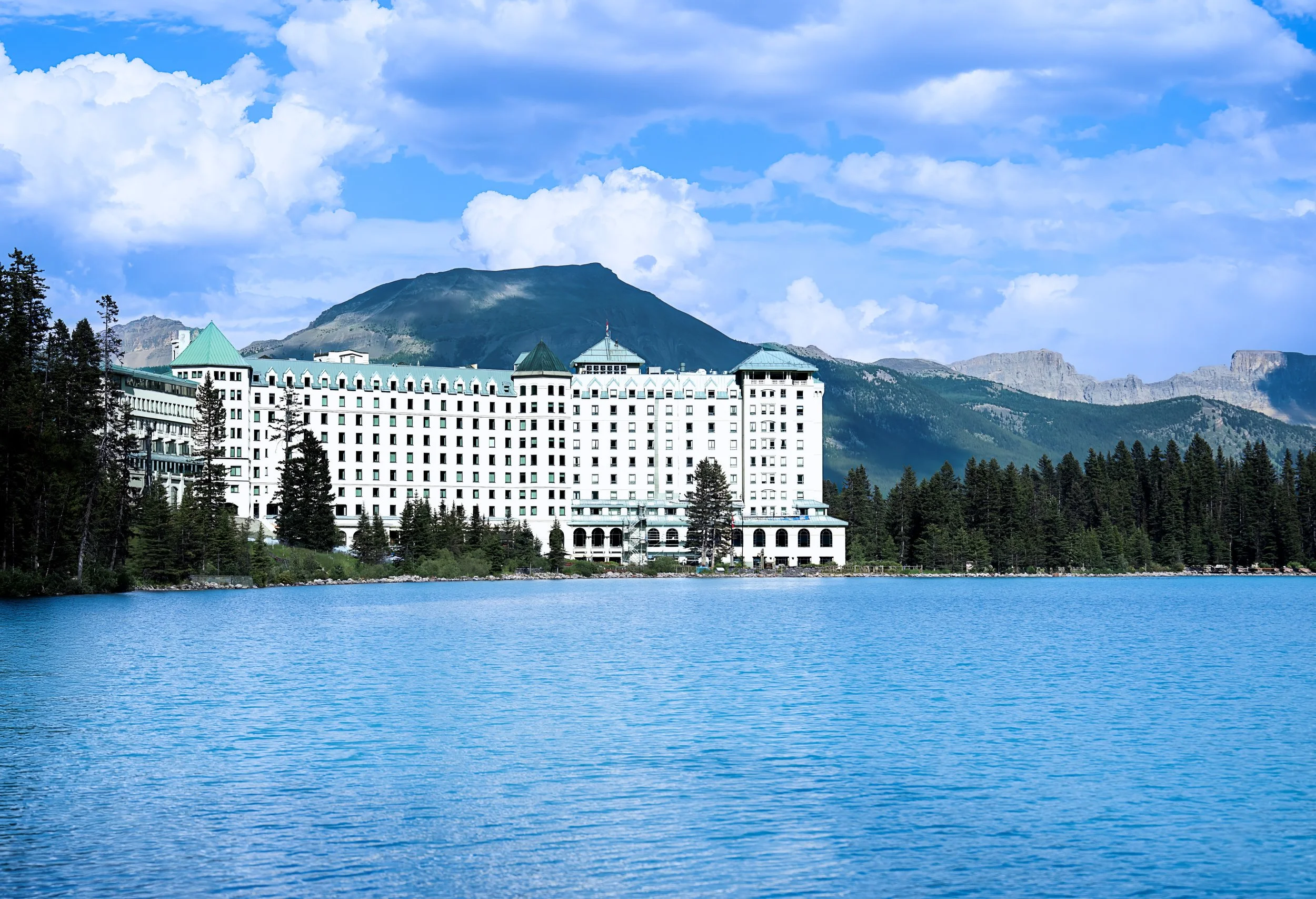
The Fairmont Chateau Lake Louise sits at the edge of the water beneath towering mountains, creating one of the most recognizable scenes in the Canadian Rockies.
But step away from the hotel and the landscape quickly takes over.
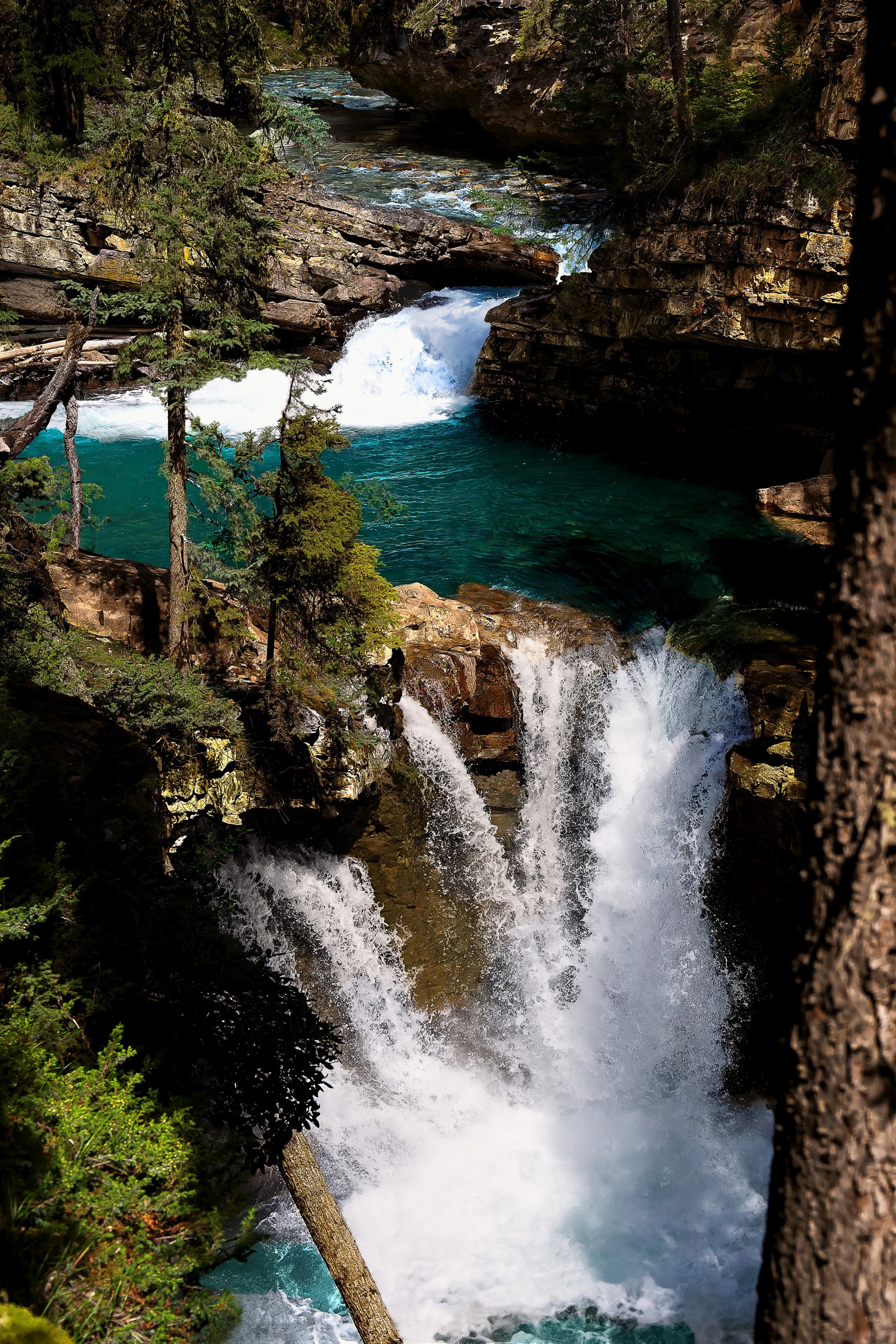
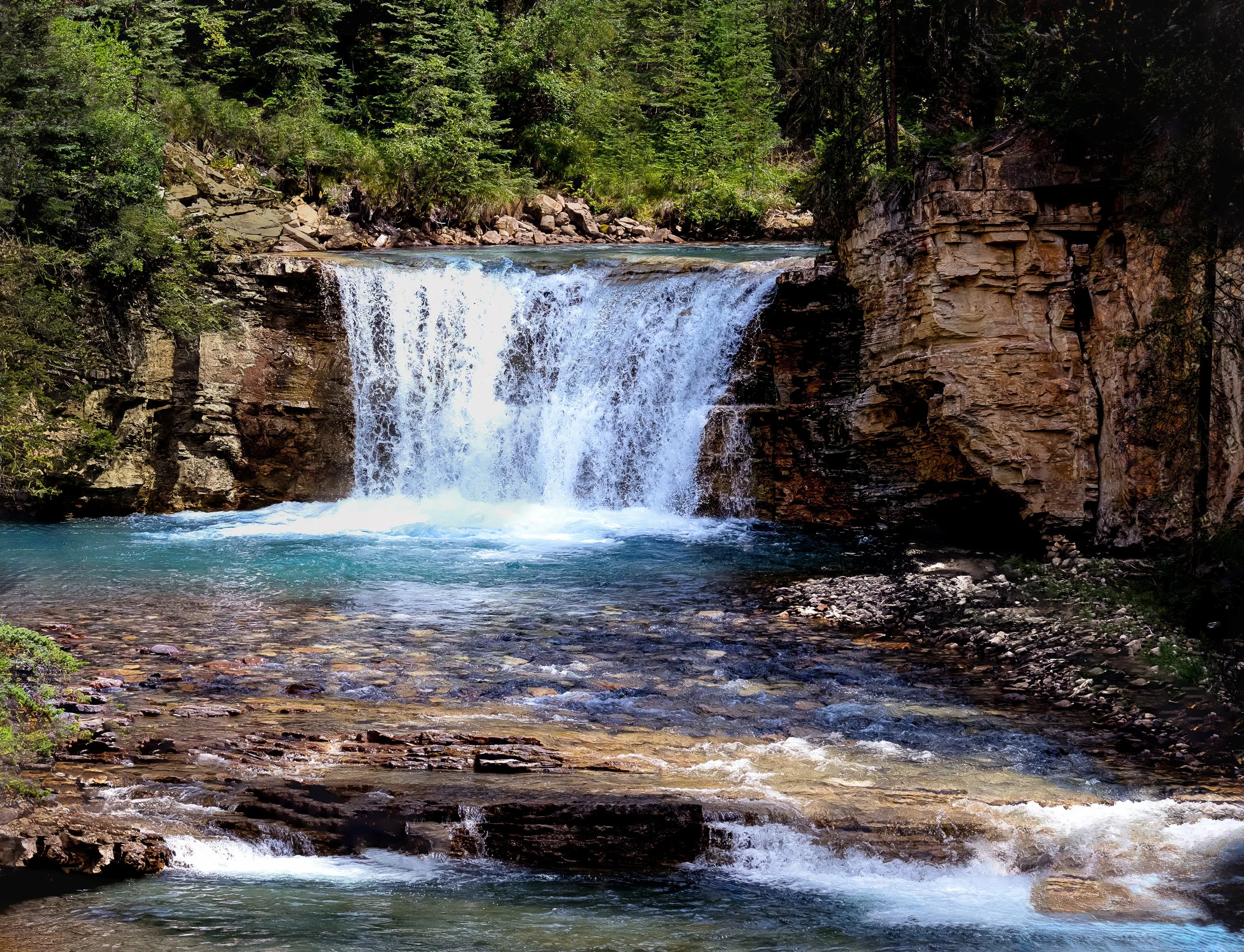
We also explored Johnston Canyon, where the experience became much more intimate.
Instead of enormous vistas stretching toward the horizon, the landscape closed around us—steep canyon walls, rushing water and waterfalls echoing through the narrow gorge.
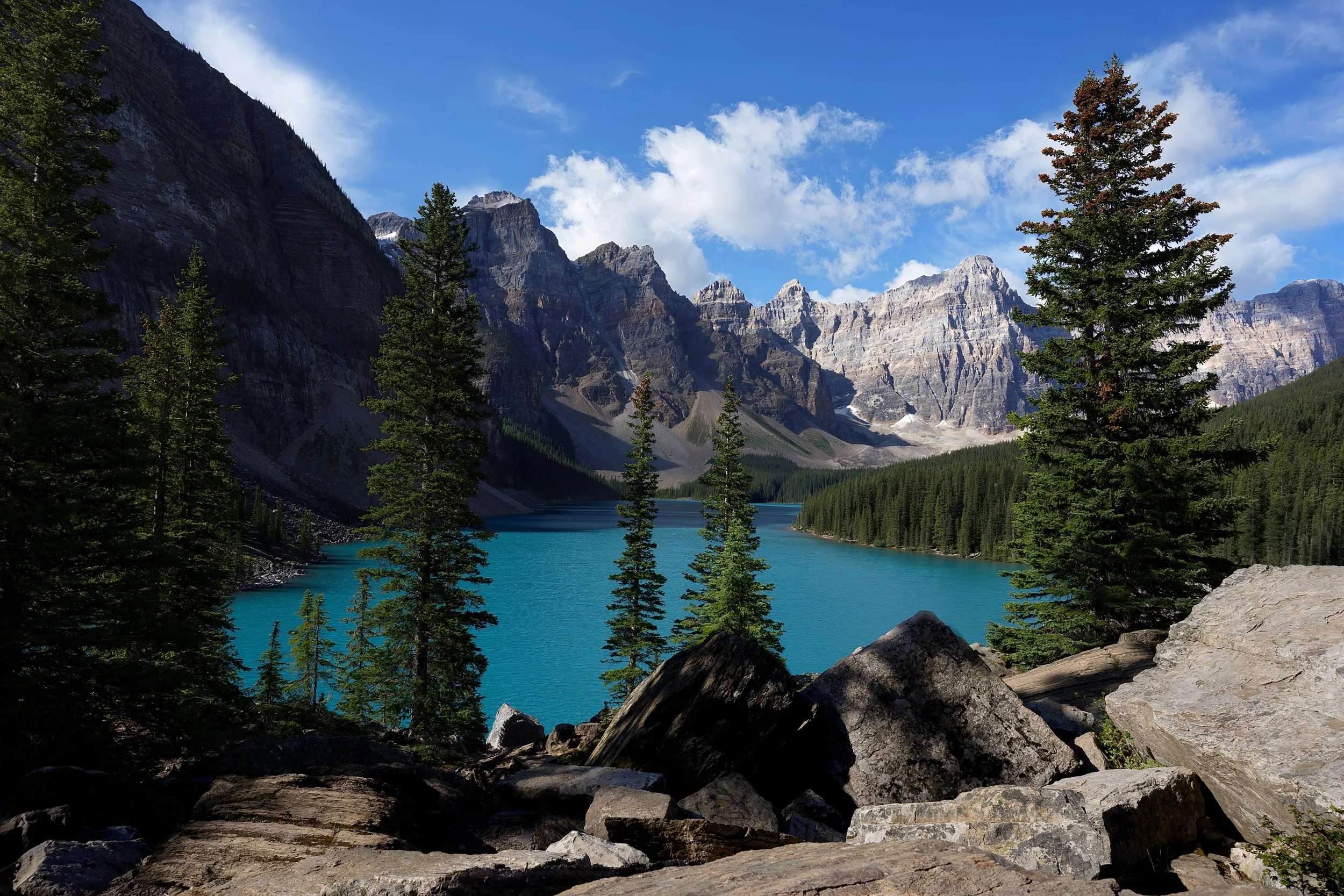
And then there was Moraine Lake.
For our two nights in Banff, we stayed at Moraine Lake Lodge.
That meant Moraine Lake wasn't simply somewhere we visited during the day.
For a brief time, it was home.
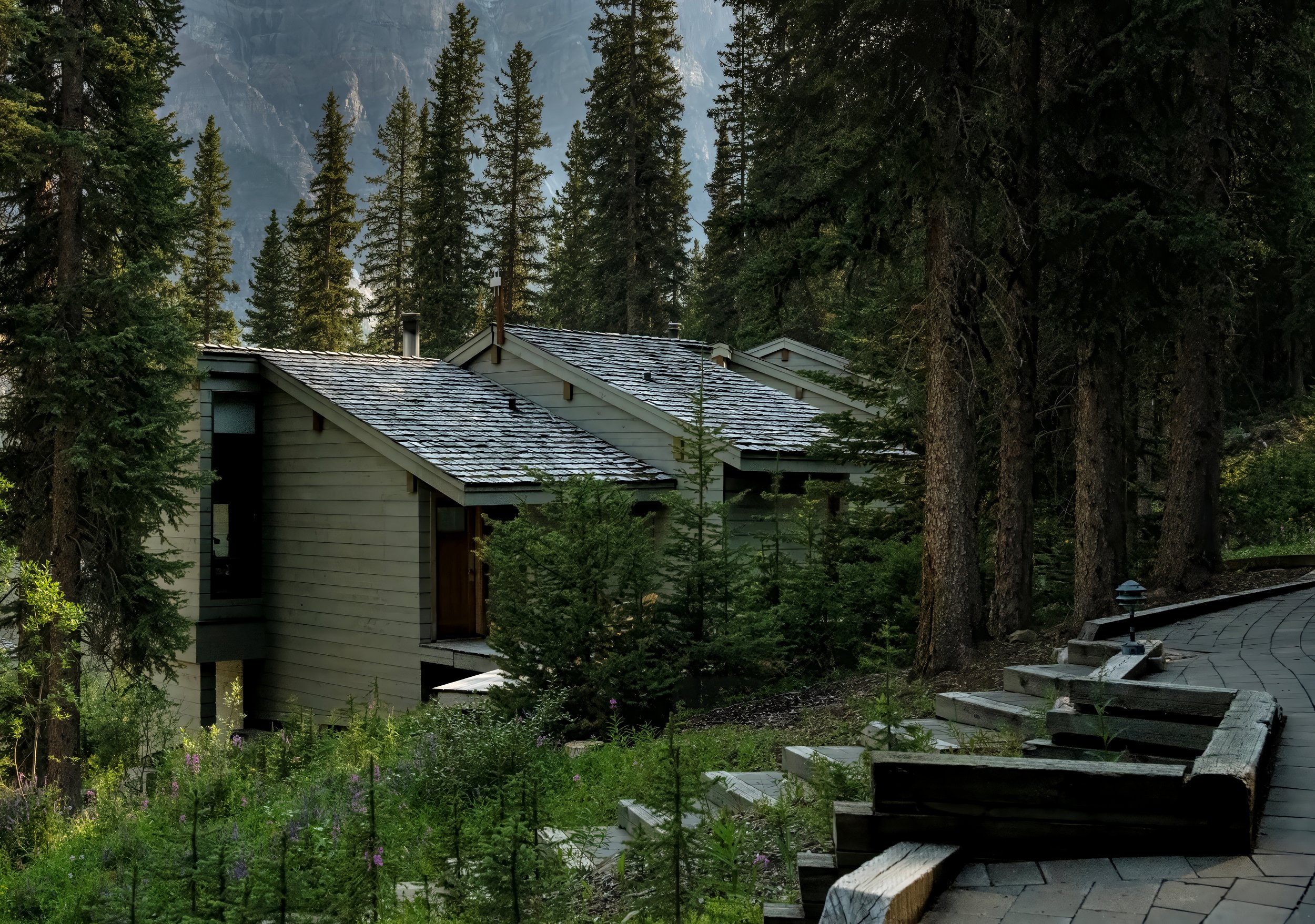
Being able to stay beside the lake gave us the opportunity to experience it as the light changed and the crowds diminished.
And Moraine Lake changes constantly with the light.
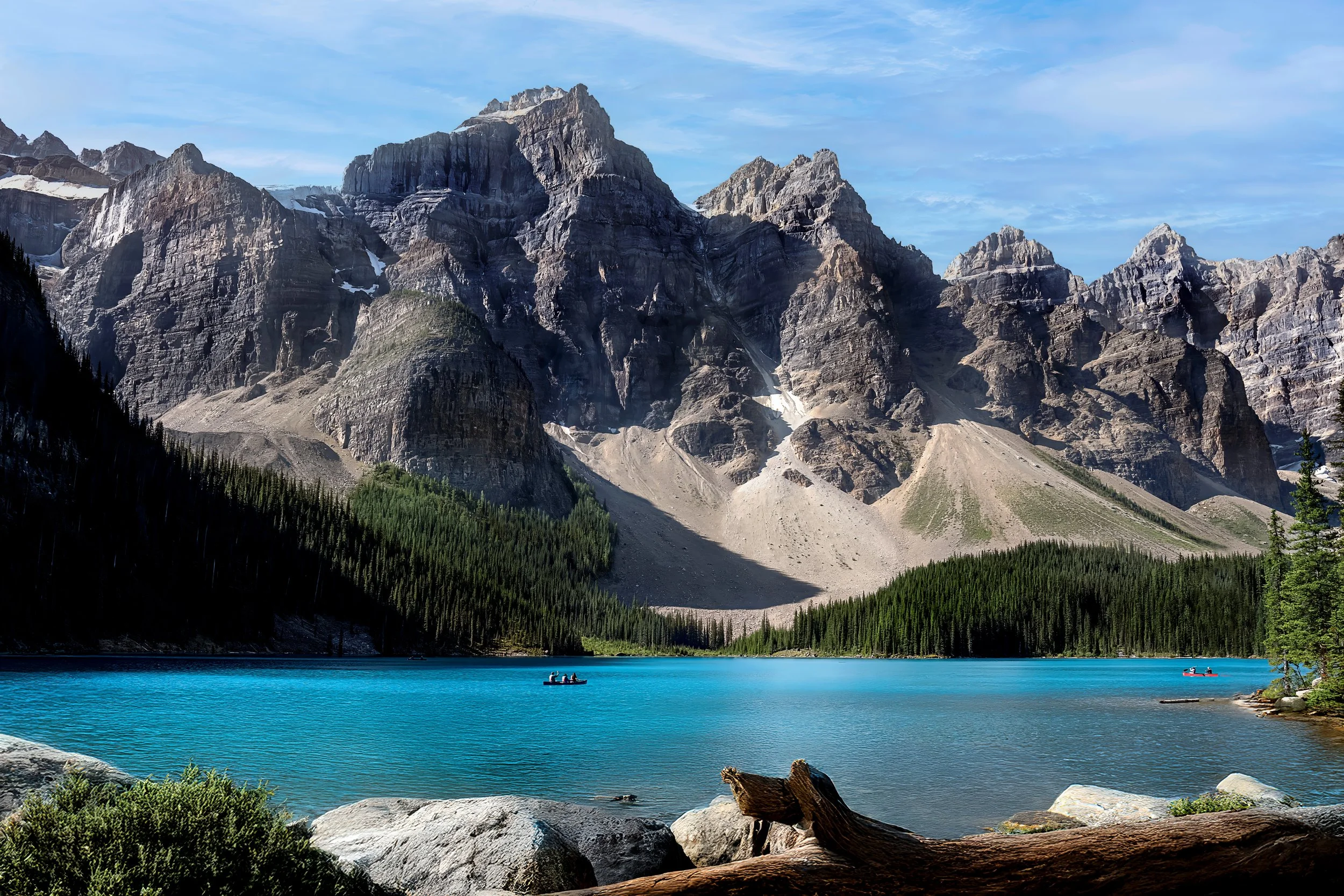
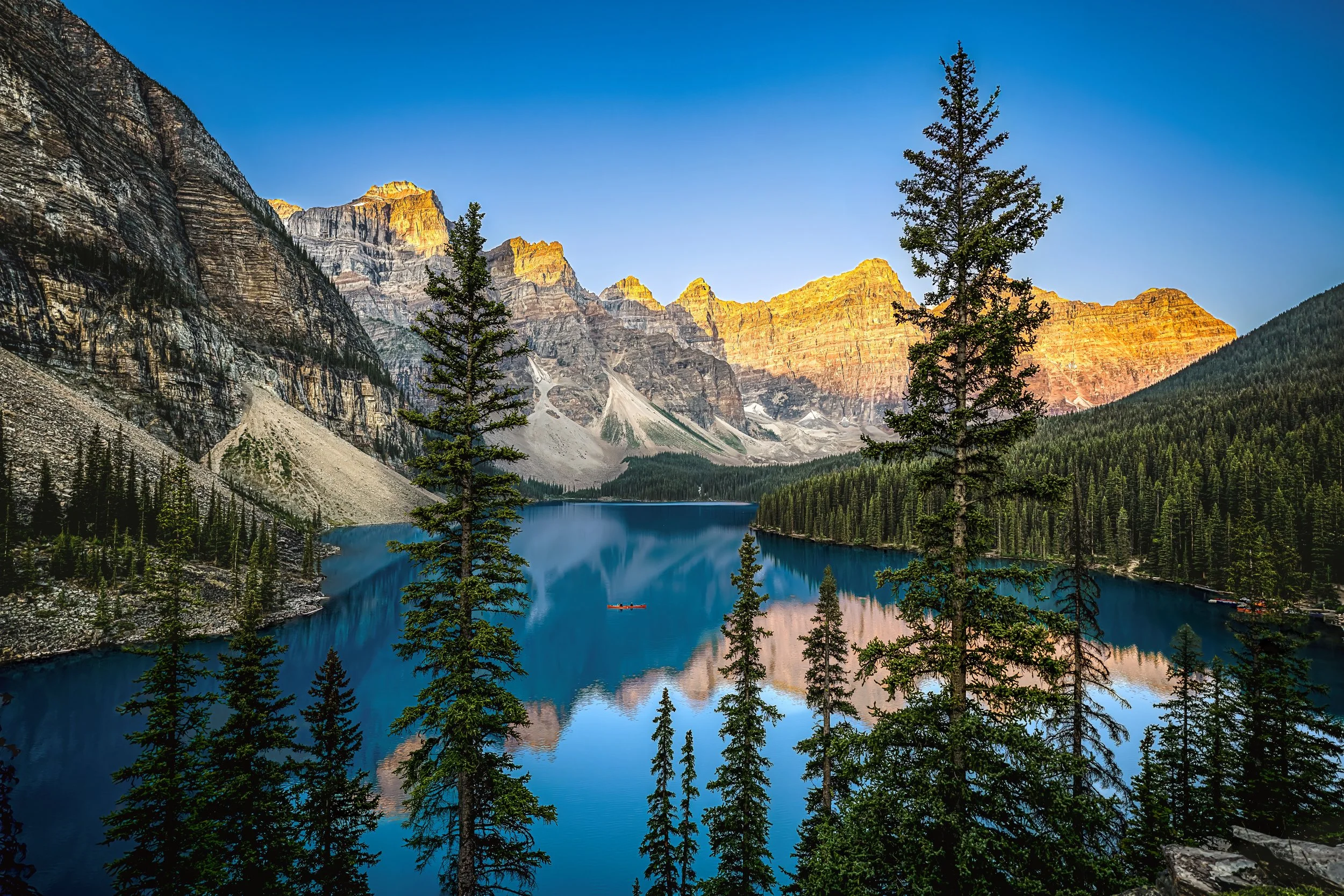
The enormous peaks of the Valley of the Ten Peaks rise directly behind the lake, while dense evergreens frame water so intensely colored that it almost doesn't seem real.
Occasionally, something as small as a canoe was enough to reveal just how enormous the surrounding landscape really was.
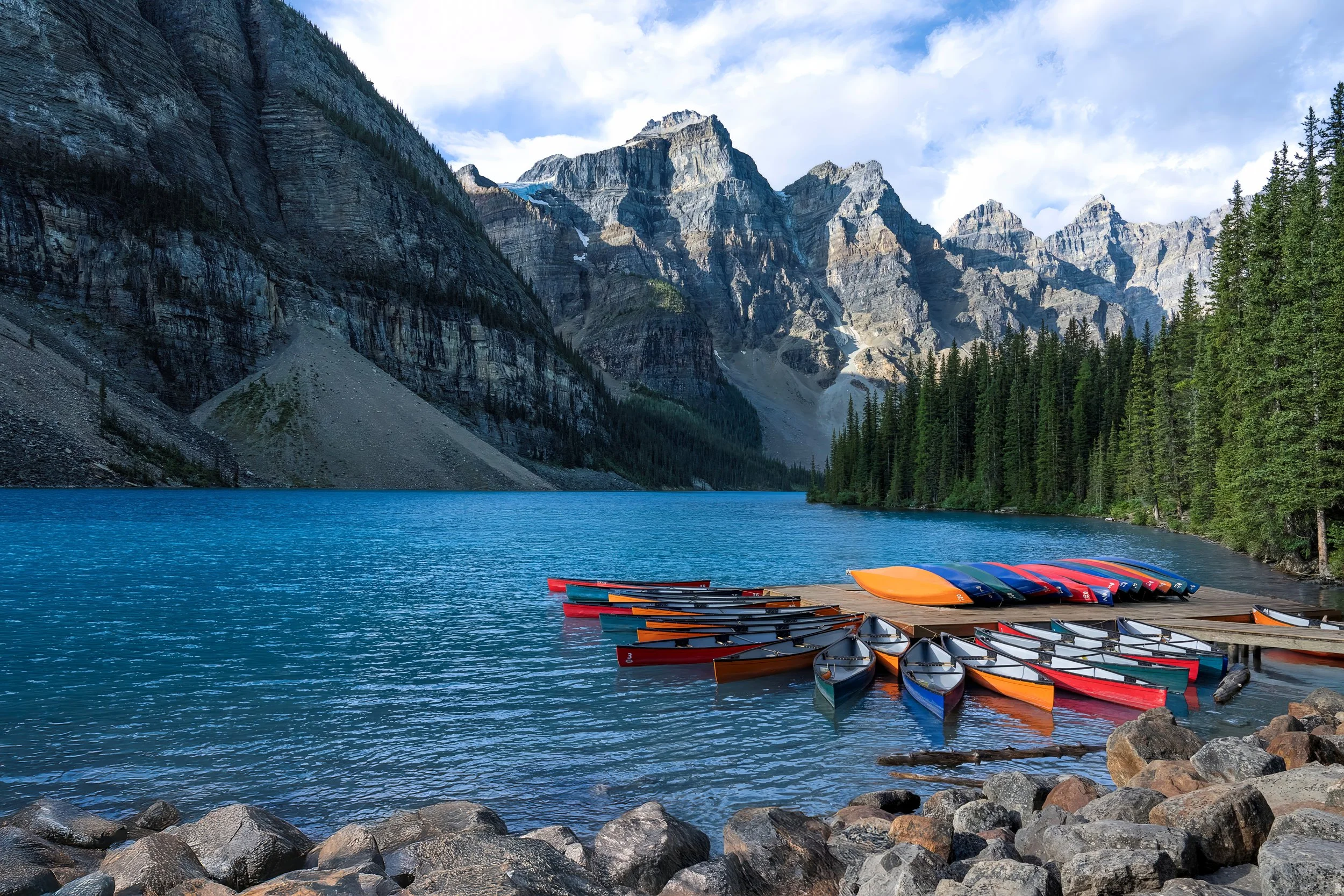
But my favorite moment at Moraine Lake came when the light transformed the mountains themselves.
As the low sun reached the upper peaks, the gray rock suddenly turned brilliant gold while the lake below remained a deep blue.
For a few minutes, everything came together—the mountains, the reflection, the trees, the color of the water and even a tiny red canoe almost disappearing within the enormous landscape.
It was one of those rare photographic moments when the scene in front of the camera already seemed complete.